This is really quite a big deal. A tremendous amount of modern research ends up being sold to journals which require unreasonable payments to access it and only pay the original authors a pittance. It’s nice to see an agency like NASA deliberately widebanding its findings.
Not sure if people fully realize just how big of a deal this is.
THIS is how science is advanced. Not through biased corporate research, business secrets, marketing, paywalls and patent wars. But through open, uncensored and unrestricted public access to knowledge.
I’ll always signal boost this because not only does this work for people in under privilege areas it’s also proof of human ingenuity.
Really, we kids that grew up in the early 90s were all told about how we had to conserve water because drinkable water was such a rare resource and people in foreign lands were basically fucked up the ass because there was no way for them to get drinking water. 20 years and 20 bucks later one of the biggest problems humanity faced is a non issue. THAT’S FUCKING CRAZY!
Somebody should start one of those online donate things where people can donate money to buy these to send to areas with unsafe drinking water. But somebody other than me should do it because I don’t know how to do that kind of thing or get the word out.
this is amazing
FYI to everyone, if you purchase a LifeStraw through EarthEasy, they will send you a LifeStraw and also send one to the Philippines (through the Rotary Water Projects) so that the victims of Typhoon Haiyan can have safe drinking water. So if you were thinking of buying one, buy through them, not Amazon. It’s the same price.
Follow-up to above, you also can donate directly to the LifeStraw fundraiserhere without needing to buy one for yourself. You have drinking water right now. You can wait to get this. They cannot.
I need a few of these for my zombie apocalypse back pack
A 25-year-old student has just come up with a way to fight drug-resistant superbugs without antibiotics.
The new approach has so far only been tested in the lab and on mice, but it could offer a potential solution to antibiotic resistance, which is now getting so bad that the United Nations recently declared it a “fundamental threat” to global health.
Antibiotic-resistant bacteria already kill around 700,000 people each year, but a recent study suggests that number could rise to around 10 million by 2050.
In addition to common hospital superbug, methicillin-resistant Staphylococcus aureus (MRSA), scientists are now also concerned that gonorrhoea is about tobecome resistant to all remaining drugs.
But Shu Lam, a 25-year-old PhD student at the University of Melbourne in Australia, has developed a star-shaped polymer that can kill six different superbug strains without antibiotics, simply by ripping apart their cell walls.
“We’ve discovered that [the polymers] actually target the bacteria and kill it in multiple ways,” Lam told Nicola Smith from The Telegraph. “One method is by physically disrupting or breaking apart the cell wall of the bacteria. This creates a lot of stress on the bacteria and causes it to start killing itself.”
Before we get too carried away, it’s still very early days. So far, Lam has only tested her star-shaped polymers on six strains of drug-resistant bacteria in the lab, and on one superbug in live mice.
But in all experiments, they’ve been able to kill their targeted bacteria – and generation after generation don’t seem to develop resistance to the polymers.
Her name is Shu Lam and her name belongs in the title. Give women of color their proper recognition for their constant world-saving knowledges and actions.
You can read more about her research (which published in November yaaay!) here.
FIVE PARAGRAHS (although short) before her fucking name was mentioned.
Do not read or listen to this if you are not prepared to face some really challenging questions about the nature of reality and the way we perceive it.
I’m not joking, I’m not being clever. I’m being totally serious: this is really heavy stuff and if you’re inclined to spin into madness when you think about these sorts of things, stay away.
As a cognitive scientist studying and thinking about perception since 1997, I’m not nearly as unsettled about this as some folk might be. I spend the better part of my life (and a Nerd Nite talk!) convincing people of exactly this! Reality, as we experience it, is a total lie made up by our brains to try and bring order to a system that is completely indifferent to our existence.
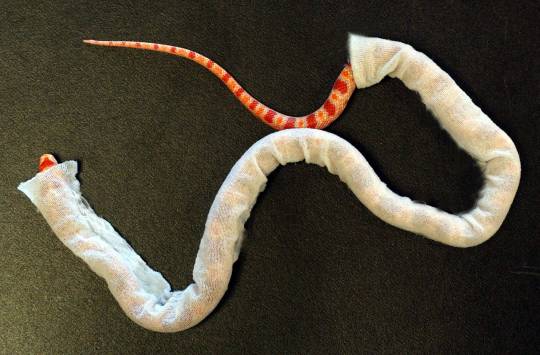
Well they put SNAKES IN LITTLE SHIRTS to find out!
SHRIMPS ON A TREADMILL
biology is the greatest
bad and naughty children get put into the bee wiggler to atone for their sins
The best thing about the ant one is that somebody clearly was like “Oh well ants probably count their steps” and that was just like… a thought that came into their head.
THE BEE WIGGLER
This demonstrates that discovery requires madness.
gravity was discovered because Newton just so happened to have an apple fall on his napping ass what do you think science is
This is a cool post but AAAH I need to talk about the ants.
>somebody clearly was like “Oh well ants probably count their steps” and that was just like… a thought that came into their head.
Not just any ants–desert ants! See, most ants lay down scent trails to find their way around. But in the desert the damn ground blows away constantly. So how do desert ants find their way around? Maybe they count.
>scientists wasting budget and time to see if ants count their steps
Okay but like. Ants can count. Ants have teeny teeny tiny brains and they can count. Do you know how teeny an ant brain is? Because I have spent time dissecting them out and let me tell you it is one of the most ridiculous occupations I have ever engaged in. They are like period sized. <–these things here at either end–>.
And the really cool thing about finding out that a teeny tiny brain can do a thing, is that the brains are simple enough that we actually might have a shot at figuring out precisely how they efficiently encode the ability to count. And then we can apply that to things like math and computers and living human brains, which we aren’t allowed to dissect very much because reasons.
Also, this was an awesomely clever experiment because do you want to know the budget for gluing stilts on ants to see what happens? Really small. Like ant brains.
>there had to be a guy who made ant stilts and put them on the ants
Their names were Matthias Wittlinger, Rudiger Wehner, and Harald Wolf, and the stilts were boar hairs! Also there was a second part of the experiment where they trimmed the ant legs to make them take shorter steps, but no one ever talks about that part because it’s less cute and more morbid. :O (It’s… slightly less morbid when you know this kind of thing happens naturally to ants with age and high temperatures. Life is hard for ants. But they are excellent at counting.)
>Science.
I know right?
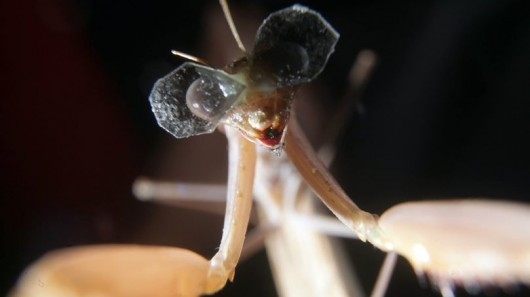
Okay now I want you to talk about the mantis glasses and the bee wiggler.
Thousands of scientists in Germany, Peru and Taiwan are preparing for a new year without online access to journals from the Dutch publishing giant Elsevier. Contract negotiations in both Germany and Taiwan broke down in December, while Peru’s government has cut off funding for a licence.
“It’s very unpleasant,” says Horst Hippler, spokesperson for the DEAL consortium of state-funded universities and research organizations, which is overseeing negotiations in Germany. “But we just cannot accept what Elsevier has proposed so far.”
1. You as a taxpayer pay for the salaries of academics, and among those who are scientists, their labs. This is as it should be.
2. But then scientific research and academic papers are enclosed by private corporations like Elsevier behind pay walls and sold back to the public (public and university libraries, individuals, etc.) that paid for the labor behind these papers in the first place.
As a result…
3. The transmission of knowledge is slowed down. One way this happens is the common practice of imposing 6 month to 12 month ‘embargoes’ that limit access to journals. If your library or institution can’t afford the high rates that these companies charge, you may have to wait a full year to access any number of journals.
4. Access to information becomes another source of inequality.
5. Students and even academics everywhere are unable to access information they need.
6. This might very well slow the pace of research in various areas, including urgent medical research.
7. The exorbitant fees charged by these academic publishing companies drain scarce university and public resources.
And for what purpose?
Basically none. Everything a company like Elsevier does could be done by the public sector at lower cost and done in such a way as to eliminate the castle walls that limit access to knowledge.
The for-profit academic publishers really exist for no other reason than to parasitize public wealth for private gain.
Martin Shkreli was the “big pharma bro” who outraged the world by hiking the price of an essential drug from $US13.50 ($18) to $US750 a tablet.
Now a handful of year 11 students in Sydney have shown him up, cooking the same drug in their school lab for about $2 a dose.
And they did it without violating any of the patented methods used to synthesize the drug. The downside is well…
But could they sell it on the open market in the US?
“While the drug is out of patent, Turing Pharmaceuticals controls its distribution and sale through a loophole called the ‘closed distribution model’,” said Associate Professor Todd.
“To take the drug to market as a generic, you need to compare it to Turing’s product. If Turing won’t allow the comparisons to take place, you’d need to fund a whole new trial,” he said.
The drug, however, is available in Australia for a reasonable price. Fifty tablets of a 25 milligram dose will cost $12.99.
Still. Grats boys!
A perfect demonstration not just of the power of science and youth creativity, but of the stifling fuckery of big business.
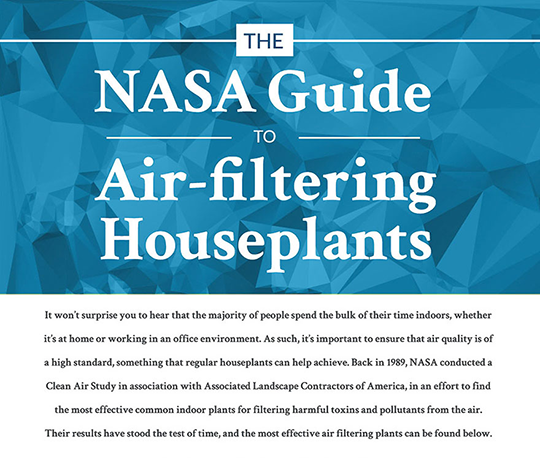
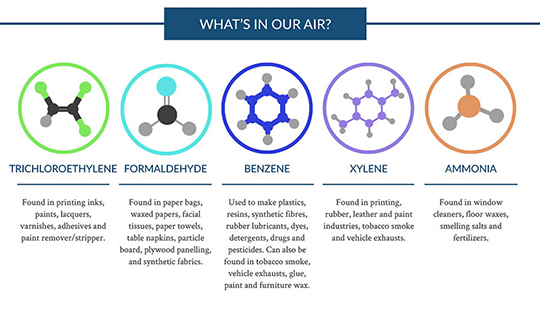
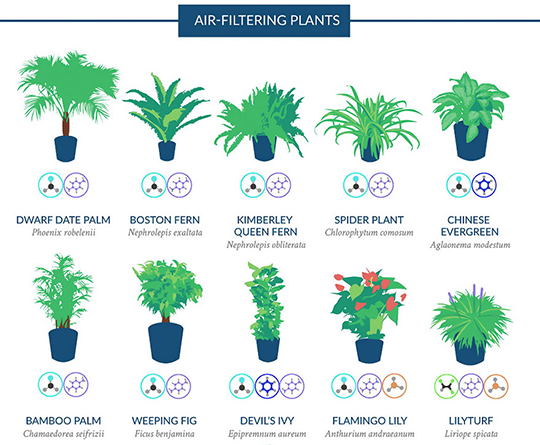
Because most of us spend the majority
of our time indoors, NASA conducted a
Clean Air Study to determine which
common houseplants are the best for
filtering harmful toxins like ammonia
and formaldehyde from the air.
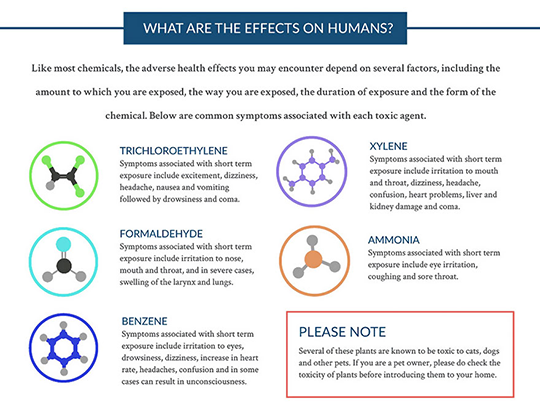
**Please note: Several of these plants are known to be toxic to cats, dogs and other pets. If you are a pet owner, please do check the toxicity of plants before introducing them to your home.**


 myblog