I have spent the last 8 horrified/fascinated hours digging down the rabbit hole of a famous Cornell University marketing professor’s fake-research empire crumbling as soon as anyone actually looked at his methods and it just keeps getting crazier the more I look. Among other highlights, the Joy of Cooking copyright holders actually caught him before the scientific community did.
For reference: this is a dude who has mostly worked in the psychology of food and nutrition. He got famous for publishing a whole lot of catchy studies about what makes people eat more or less, and you’ve probably heard some of his stuff that got turned into huge media soundbites. Probably his most famous one was an experiment where they served people soup, but half the people had trick bowls that were connected with a tube to a pot of soup under the table so they constantly refilled, and he claimed people ate more without realizing. I remember reading about it in Muse when I was in middle school and everything. This dude is a tenured professor at an Ivy League school! He’s done TED talks! He’s authored books! He’s done speech tours! He was a policy advisor for the USDA!
He published a paper that requires you not to notice that the amount of food eaten by children and the amount not eaten add up to more than the amount served in all three categories.
Half his papers are >40% copy-pasted from other papers of his. In one case the data table was copied over, despite allegedly being from a different study. He allegedly sent out three different surveys to three different demographics several years apart and got exactly 770 back for all of them. (In one case this was a 77% response rate. For a randomly mailed survey.) One of his papers claimed in the text to have been conducted on 8-11 year-olds, but was actually conducted on toddlers age 3-5. Another paper claimed Pringles weigh 11 grams each. (For metric-challenged Americans, that’s basically the weight of two quarters.) Sometimes what was in charts didn’t match what was reported in the paper text. Sometimes graphs were misleading. Sometimes his reported sample sizes changed within a paper.
Stephanie Lee at Buzzfeed News seems to have been leading the journalistic charge on this, but if you feel up to reading scientists talking about statistical analysis, more of the gory details of exactly how bad this is are over here.
I especially recommend the links to James Heathers’ SPRITEanalyses, because he’s hilarious even though I only know, like, 30% of the statistics involved. (At least read the first one, for the statistical analysis that concluded that one of the children in the study was secretly a Clydesdale.)
The Joy of Cooking thing is summarized in this New Yorker article: a letter This Dude published in 2009 claimed JoC’s recipes had gotten 44% higher in calories per serving since it was published. The people who owned the estate pointed out that he’d only looked at 18 recipes in the cookbook, out of 4500. He claimed there were only 18 that had been in it since it was first published. Since they were working on putting together a new edition, they found that there were 245. It turned out that he’d only looked at things that had exactly the same names, which resulted in comparing some totally dissimilar recipes, AND that some of the recipes he’d looked at didn’t even specify serving size. When all the rest of this broke, the Joy of Cooking Twitter dragged him into the ground in exactly the tone you would expect from the Joy of Cooking dragging someone into the ground.
In short:
The whole story has been going on for well over a year, too – Chronicle of HIgher Education ran a story on his p-hacking issues in March of 2017 when it appeared that he might just have made a few typographical errors and maybe wasn’t aware of latest developments in the field of statistics, rather than just being a full-on fraud. It’s well worth a read, they interview him and he does a very early attempt at charming spin control.
They talk a lot about why he might have been published even if people noticed his math/methodology was wrong, the gaps in the gates at peer-reviewed journals and such, but I suspect a lot of it is that he was frequently “confirming” stereotypes about the relationship between food, self control, and obesity.
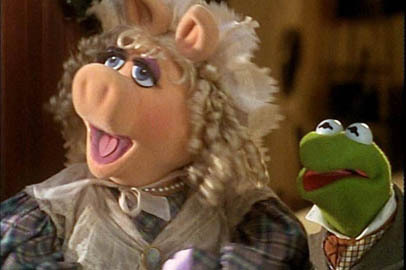
i hate reading this post for the sole reason that it made me realize against my will that kermit and miss piggy are literally mr. and mrs. bennet personified and this crossover would probably work
i am disturbed by how well this works
alright now i’m just pissed off because that fits even better
Thanks for a fantastic question, anon! The evidence I’ve put forward for this characterization of Crowley comes directly from the novel; I think this may even be the second or third time I’ve received this question. As I’m currently at work and don’t have access to either my e-book or one of my hardback copies, I’m going to give you a list of items and quotes from canon, off the top of my head, that point in this direction:
In the Beginning, Crowley makes a beautifully foreshadowing remark to Aziraphale: Funny if we both got it wrong, eh? Funny if I did the good thing and you did the bad one, eh? Pay attention to that sentiment next time you reread; all following instances of Crowley doing the right thing and Aziraphale doing the wrong thing thereafter will seem starkly obvious.
During the series of conversations that led up to the Arrangement, Crowley is the first one to bring up how unfair humans have it, that you can’t expect Aziraphale’s (read: Heaven’s) idea that humans are only good or bad because they want to be to work unless you start everyone off equal (You can’t start someone off in a muddy shack in the middle of a war zone and expect them to do as well as someone born in a castle, he says). He finds Heaven’s lack of mercy deplorable (That’s lunatic, he tells Aziraphale).
Aziraphale is too careless to take a living dove’s welfare into account when he shoves it up his sleeve in the first place. When he finds it dead and squishy in his coat, he’s no more than mildly annoyed; Crowley, on the other hand, gently takes the bird from him and breathes life back into it. Actions speak louder than words.
Crowley’s reaction to the Spanish Inquisition breaks my heart, i.e. once he hears about the atrocities, he goes and gets drunk for a week in order to forget. Compare this reaction to one of the fleeting thoughts he has while he’s on the M25, having just left the scene of Aziraphale’s burning bookshop (and I need not quote you fragments of that scene from memory, although I swear I’d do it if I thought it were necessary to make the point): Aziraphale’s gone, the world’s going to end, so why not find a nice little restaurant somewhere and just get drunk out of his mind? That’s so very, very telling.
Early in the book, the narrative makes light of Crowley’s dislike of the fourteenth century, but we find out later, in a moment of extreme terror and duress, that he hadn’t felt like this since the fourteenth century. I’m a scholar of the Middle Ages, so for those of you not intimately familiar with the fourteenth century, I’ll tell you this much: it was a vibrant, fascinating, brilliant time to be alive. Someone like Crowley would not have found the fourteenth century dull. No: for my money, he spent the latter half of the fourteenth century terrified because that’s when the Black Death ravaged Europe. All of the things you love in the world, humans and all their brightest achievements, snuffed out by the millions. That’s so vast that trying to drink your way through it would’ve been unfeasible even for an ethereal creature like Crowley.
Crowley’s boundless optimism, never mind that he’s completely and utterly terrified of his employers. Think of his reaction every time they contact him over the radio or cutting into what he’s watching on telly. You cannot convince me that someone whose Fall is pointedly described as just sauntering vaguely downwards is actually evil. He sides with an angel and humanity and successfully helps them to win a rebellion using only words and ideas.
Crowley’s core nature is writ large on every page, as far as I’m concerned. If you ever reread the book, I’d be interested to know if you reach a similar conclusion.
And of course there’s Aziraphale’s belief that Crowley is unable to feel or even understand love/goodness. From the examples above, it’s obvious that Crowley’s capable of empathy, but Aziraphale’s callousness toward him, and his detached relationship with humanity, even after 6,000 years, proves that empathy isn’t one of his greatest virtues.
What they’re able to teach each other is such an incredible inversion of stereotypical expectations, too: Aziraphale shows Crowley what it means to be ruthless when push comes to shove, and Crowley teaches Aziraphale a thing or two about mercy.
Although, just going to say, he is essentially kind. One of the first things we learn about Aziraphale is that he’s given away his flaming sword to Adam and Eve because it’s cold and she’s expecting.













 myblog