i always thought it was funny how in the lord of the rings sam and frodo head out and after awhile sam’s like “mr. frodo if i take one more step this is the farthest from the shire ive ever been” and then a ways after they meet up with merry and pippin on their daily vegetable run like jesus christ sam get out of the house once in awhile
Okay to be fair Sam is a working class dude with a physical job who lives on the west side of the Shire while Merry and Pippin are spoiled rich kids with loads of leisure time who live a decent ways further east so cut the guy a break he carries the One Ring to Mount Doom when Frodo can’t and does not deserve this kind of talk.
Rosie had heard all of the stories about old mister Bilbo coming home with boxes and barrels of treasure. He had been gone so long everyone had assumed he was dead, but then he had ridden into town with gold in his pony’s saddlebags.
She dreamed about Sam coming home, a feather in his cap, gold tucked into the sensible pockets on his sensible pants. She dreamed about Sam coming home. They made jokes in the Green Dragon about young mad Mr. Baggins, just like his uncle old mad Mr. Baggins, who had run off with three gullible youngsters and gotten eaten by wolves.
Rosie watched her mother during the occupation, the ways she counted curly heads, the way she canned vegetables and fruits, salted meats, then bound them up in cloth and tucked them under each child’s bed, in the hollow in the tree down the road, buried out by Miller’s Pond. Rosie watched her father walk the edges of the property, like he was stomping his ownership into it. He kept his pitchfork sharp. He was preparing to fight for his home and her mother was giving them a way out.
Pippin and Merry came back taller; they would bump their foreheads on low doorways all their lives. Frodo came back wiser; he would feel lost on the wind until the day he stepped onto a creaking deck and let it sweep him away. Sam came back; he had grown, for all miles and hunger had worn him down to the quick.
When Sam came home, there was a feather in Pippin’s cap, a horn on Merry’s hip. All Sam had was a box of dirt with one large, smooth seed tucked inside. Even in Mordor, Sam had only been fighting for the Shire. He spent the rest of his life helping things grow.
Let’s talk about Sam crying over rabbit stew, because a brace of coneys had been a spot of luck, once; because even then, even when he still had his pots and his pans, when Frodo had not yet snarled at him and told him to go– Mr. Frodo had still been gone too far by then to ever come back again.
Rosie, who did not cry easy, chopped onions so he would not be the only one with wet cheeks to scrub off. She asked him about herbs and spices, about stirring and cooking times, about what loaf would go best with it all. Sam said, “Rosemary, tarragon.” Part of him still rang against the greening metal of a copper pot dropped down a chasm and left somewhere on the edges of Mordor, but she saw him breathe deep and reach for thyme.
When they brought Frodo a bowl in the little study that had once been Bilbo’s, Frodo warmed his hands in the steam and chuckled when he recognized the smell. Sam pressed his cheek into Rosie’s curls and remembered that not everything was lost.
Sam came back different, but Rosie had not stayed the same either.
Some nights Sam couldn’t sleep on the bed. He laid out with a blanket on the floor and apologized for it. She checked the locks three times, and didn’t trust them anyway. If men came to the door in the night, smashed through the window, set the house on fire– she knew three ways out. She knew the path she’d take through the forests and little hills, two good places to cross the water and three mediocre ones, how to gather and set snares and never have to come back.
She also knew that she would come back. Sam had gone out and met the world, but Rosie had stayed here and staked her claim.
Between helping with the reconstruction, clearing out abused hobbit holes, planting new trees, raising her children, and managing Bag End, Rosie took tea into Mr. Frodo’s little study and let him tell her about his story.
Some days he sat up, waved his hands, talked about Moria like it was Mr. Bilbo telling hobbitlings about the three trolls. On others he muttered about language and conjugation, dialects of Elvish, and Rosie learned words for things she had never seen. One of her sons would be named for Frodo, and one of her daughters Elanor, for a flower that grew on the floor of a forest no hobbits but four had ever seen.
He told her about Faramir and Boromir–their adventures, and their family trees to seven generations back. Rosie scattered her younger children over his study floor on those long afternoons, where they got cookie crumbs and sloppy paint all over the sheet she’d lain over his soft carpet.
It was a late night, the kids abed, when he told her about Mordor, about Gollum and the eagles, and how Sam had not given up, even at the very end. She had come down to turn over some marinade in the pantry and found the study light on, Frodo bent over his desk and scribbling. “I have to get it all down,” he said, and smiled at her unhappily. “Too tired right now to be scared of it all.“
So she got some cocoa and a heavy quilt for each of them, and stayed to listen to him mutter and scratch out lines. “Frodo Nine-Fingered and Samwise the Brave,” he told her. “We talked about how we were going to be stories, one day.“
When Sam came down the hall in the morning, his wife’s curls were pooled on the desk beside Mr. Frodo’s, inked pages scattered under their cheeks and curled palms. Sam had watched Frodo earn each and every white hair on his head, and he was learning the stories still behind each tired crease and laugh line on Rosie’s face. Sam leaned against the door frame and watched them breathe, in and out, until the kids came shrieking down the hallway and woke them.
The day Frodo gave him the Red Book and left, Sam cried on the shores of the sea and watched him go. Frodo had sat Rosie down that morning, over a breakfast of two eggs, thick bacon, hearty toast, a little salad– he had told Rosie he was leaving and Rosie had already known.
There were still burned scars on the soft fertile ground of the Shire. Some of them would never grow over, no matter how many seeds they scattered and watered. Rosie still had emergency kits buried in the yard, tucked in hollow trees down the road, kept under her children’s beds.
But there were strawberries growing in her window boxes, even if on the worst days she wasn’t sure if they’d be there to harvest them in springtime. On those days, Rosie padded down to the pantry and got out little glass jars of strawberry preserves. So many springs had come and gone, and so many would come again. There were some things you could carry with you.
Drop your pots, drop your pans–lose weight, faith, a finger–forget the taste of strawberries. There were little white blossoms waiting in the window boxes of Bag End to turn into blushing red fruit. Sam had carried Frodo to the end of his journey, and Frodo had given her this home. The spring would come.
Sam came back with salt crystallized on his hems and the edge of his jaw. He came back with a red book under one arm–no gold in his pockets, no gems, just his two hands tucked and curled in the warmth of them.
Their children would read Frodo’s book as they grew (Bilbo’s book, too, and those few words that were their father’s). They would not understand, not all of it, not at first. They would eat strawberries in spring and dream of Fangorn, dare each other to brave the Old Forest on the edge of the Shire. They would climb all over Merry and Pippin’s tall frames and beg to go with them when they went to visit the kings of Gondor and Rohan.
Rosie would eat strawberries in the spring. She would make jars and jars of jam to keep for long winters. She would keep kits of supplies, for emergencies, for invasions, for the children of hers who had wanderlust in their bare, woolly feet.
On nights when she could not sleep–too cold, too stuffy, too old–she would pad out to Frodo’s old study and sit among the books and things. She would read about places she’d never seen, languages she’d never heard. She would write her own notes down about the Scouring– the first little resistances, and the final front lines. She would trace her fingers over loving maps of the Shire, tracing the ways out, the places to hide, the ways back.
When she woke in the morning, her cheek on the old wood desk, a blanket would be draped around her shoulders and Sam would be asleep in an armchair, just close enough to reach out and touch.
hi i’m tolkien here are my ocs. i call them Elves (not elfs!!! if you call them elfs i will block you) they look like humans but they’re tall, live forever, and have pointy ears. that’s it bye
cs lewis: are you alright with constructive criticism? i dont want to sound mean
tolkien: no go ahead i want to hear it
cs lewis: they fucking suck
tolkien: thats not constructive criticism
cs lewis: here’s my OC, it’s jesus but he’s a lion tolkien: Furry cs lewis: blocked
I want a high fantasy movie where everyone talks with Southern US accents instead of British ones.
The Dwarves though, they can get Minnesotan accents.
ok but picture this: elves with brooklyn accents
“Hey HEY I’m castin’ here, what’d’you – listen, my pop and I serve the Great Tree goin’ back six hundred fuckin’ years so if you got a problem with our fuckin’ magic you don’t fuckin’ come down here into our fuckin’ grove to gimme shit about it.
“Right? You don’t see me fuckin’ goin’ into your shitty man-stables and tellin’ you how to milk horses, do ya? So instead you come down here, disrespect me, disrespect my pa, and how ‘bout you stop fuckin’ disrespectin’ the Great Fuckin’ Tree that grew whens’t the world was young and carries all our fates ‘n its boughs, okay?
“I said, ‘okay?’
“Okay, now fuck off.”
“Oh, ya, my clan’s been mining these ranges for 500 years, real nice place, real friendly. We make a mean hot dish, too, don’t cha know”
“Now, see, our main export may be iron, but y’see, we’re also the home of one of the modern wonders of merchantry and architecture…. THE GREAT DWARVEN BAZAAR. Four subterranean levels, all shops, biggest in the land! Full of tourists but we’re all here for a good time and we’re all for boostin’ the local economy!”
I love when ghost hunting shows are in a fucking ancient ruin and ask their questions in english
“what is your name” homeboy I was a viking several hundred years ago I don’t know what the fuck you’re saying
Is anyone else imagining “J.R.R. Tolkien: Ghost Hunter”
“Alright, now I’m going to try 8th century Anglo-Norse”
YES
#Hm no how about 4th century Gothic #Welsh? No? #Let’s try good ol’ Latin #this could go on and on #safe bet he wouldn’t accidentally insult the ghost’s mother or anything
let’s stop seeing sex as the biggest thing you can do to show someone you love them
everyone knows that the real way to show someone you love them is to find them a really cool rock. not a diamond. just a neat rock that you think they will enjoy
Not a rock THE ARKENSTONE
Why just one rock Why not three Why not the silmarils
hear me out: all-female remake of lord of the rings
hear me out: all-female racially diverse remake of lord of the rings
Isn’t 2 humans, an Elf, 4 Hobbits, a Dwarf and a celestial being in a corporeal form already racially diverse?
Well, at least in how most high fantasy uses the word “race.”
No.
If every fantasy race is imagined as entirely white it absolutely does not count as racial diversity. The implications of a world where every race (or every race that matters) is white are quite the opposite, in fact, and point to conscious or unconscious white supremacy.
feel free to re-imagine the characters as any race you want, but please understand that, in context, tolkien’s characters (almost) all being canonically white does not “point to conscious or unconscious white supremacy”
you see, tolkien’s mythology was intentionally written as stories for the english people. they had no mythology of their own – all of “their” stories had originated from other cultures. middle earth originated as an alternate history of europe (especially england) as it may have been told from an ancient english mythological perspective.
as the professor himself wrote:
“I was from early days grieved by the poverty of my own beloved country: it had no stories of its own … Do not laugh! But once upon a time (my crest has long since fallen) I had a mind to make a body of more or less connected legend, ranging from the large and cosmogonic, to the level of romantic fairy-story… which I could dedicate simply to: to England; to my country.”
“I am historically minded. Middle-earth is not an imaginary world… The theatre of my tale is this earth, the one in which we now live, but the historical period is imaginary.”
people from europe, are, of course, mostly white, so it naturally follows that the people living in an alternate history of europe would be white – as well as the fantasy creatures borne out of european mythology. including a lot of non-europeans in it would make no more sense than native american mythologies featuring white people, or japanese mythologies featuring black people, and so on.
basically, middle earth = europe, southern areas = africa, and eastern areas = asia. there are poc in tolkien’s arda but most (not all) come from places outside middle earth, which makes sense when you put it in a real world context.
diversity in fantasy is great, but please do not assume that everything that does not meet your criteria of diversity is automatically racist. thank you
When I die, they’re going to be doing the autopsy and find out that the cause of death is a bleeding stomach ulcer that, upon close inspection, actually is text that reads out the commentary directly above my own here.
“which makes sense when you put it in a real world context”
The degree to which pre-modern Britain included people of African origin within its population continues to be a topic of considerableinterest and some controversy. Previous posts on this site have discussed a variety of textual, linguistic, archaeological and isotopic
evidence for people from the Mediterranean and/or Africa in the British
Isles from the Late Bronze Age through to the eleventh century AD.
However, the focus in these posts has been on individual sites, events
or periods, rather than the question of the potential proportion of
people from Africa present in pre-modern Britain per se and how
this may have varied over time. The aim of the following post is thus to
briefly ponder whether an overview of the increasingly substantial
British corpus of oxygen isotope evidence drawn from pre-modern
archaeological human teeth has anything interesting to tell us with
regard to this question.
The following post offers a map and brief discussion of the Islamic gold
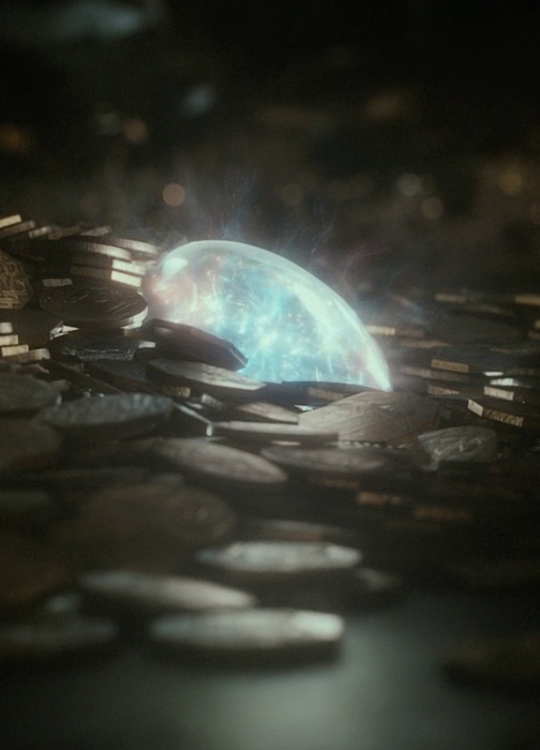
coins of the later eleventh and twelfth centuries that have been found
in England and their context. Whilst clearly rare finds, there are now
ten coins of this period known, all but one of which are thought to most
probably have their origins in Spain. Moreover, these coins are
considered to be the survivals of a potentially substantial body of this
material present in England at that time.
The aim of the following post is to offer a draft look at an interesting
Arabic account of early medieval Britain that appears to have its
origins in the late ninth century. Despite being rarely mentioned by
British historians concerned with this era, this account has a number of
points of interest, most especially the fact that it may contain the
earliest reference yet encountered to there having been seven kingdoms
(the ‘Heptarchy’) in pre-Viking England and the fact that its text
implies that Britain was still considered to be somehow under Byzantine
lordship at that time.
The following short note is based on a narrative preserved in the eleventh-century Fragmentary Annals of Ireland that
tells of a Viking raid on Morocco in the 860s. This raid is said to
have led to the taking of ‘a great host’ of North African captives by
the Vikings, who then carried them back to Ireland, where they
reportedly remained a distinct group—’the black men’—for some
considerable period of time after their arrival.
Edwards, Paul, and James Walvin. “Africans in Britain, 1500-1800.“ The African Diaspora: Interpretive Essays. Edited by Martin L. Kilson and Robert I. Rotberg. Cambridge, MA: Harvard University Press, 1976: 173-204.
Now presenting, in its full, complete, and downloadable glory, the Racism and Middle Earth series! This six part guide to Tolkien and Racism collects relevant tidbits from Tolkien’s own writings (from the most familiar to the most obscure) in order to highlight what the most problematic and the most potential-ridden parts of Middle Earth are, and outlines how we, as fans, can make Middle Earth a better place for characters of all ethnicities.


 myblog