So (according to the concept art book) as the Fellowship travels deeper into Middle Earth, the places they pass through become inspired by progressively older periods of history. The farther along you are in the story, the more ancient the design influences
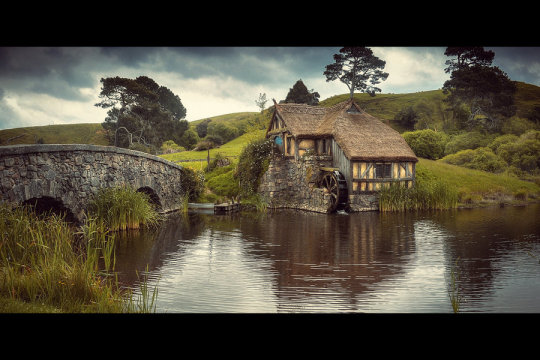
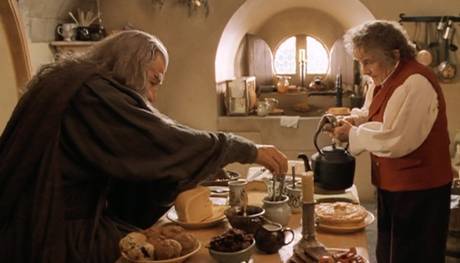
We begin in The Shire: which feels so familiar because, with its tea-kettles and cozy fireplaces, it’s inspired by the relatively recent era of rural England in the 1800s
But when we leave Hobbiton, we also leave that familiar 1800s-England aesthetic behind and start going farther back in time.
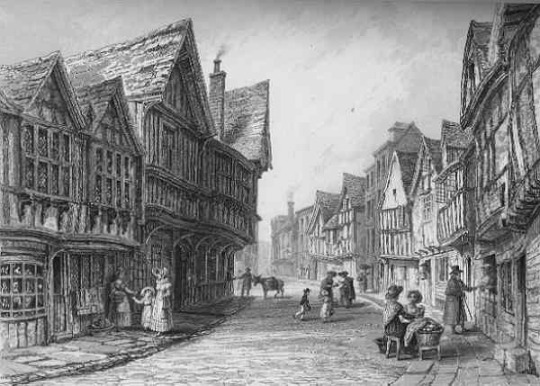
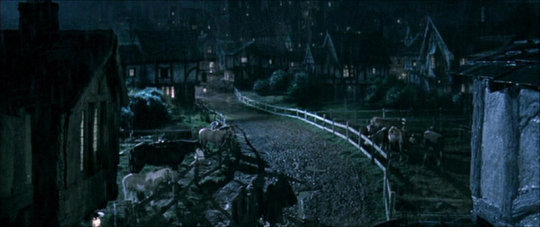
Bree is based on late 1600s English architecture
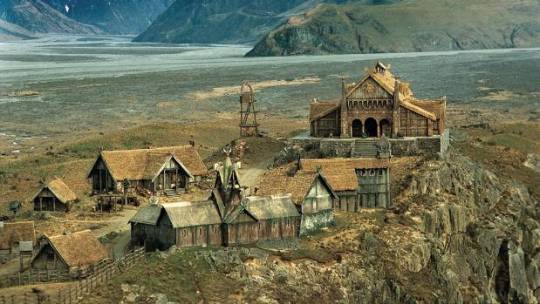
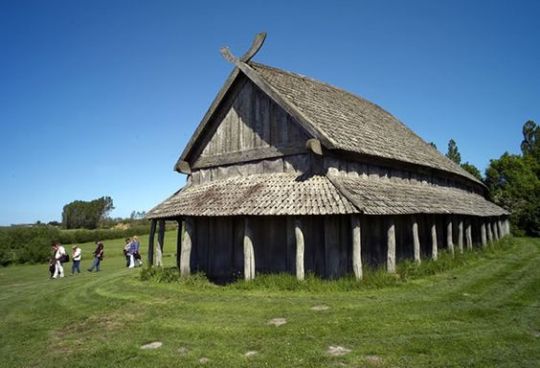
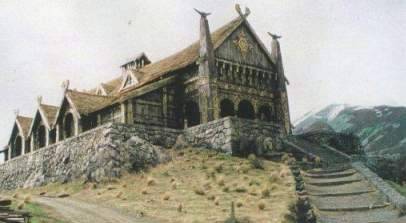
Rohan is even farther back, based on old anglo-saxon era architecture (400s-700s? ce)
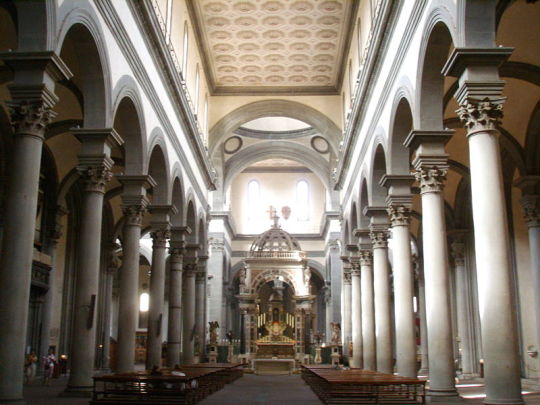
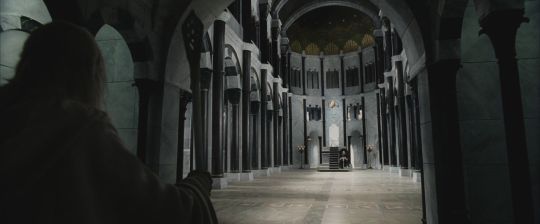
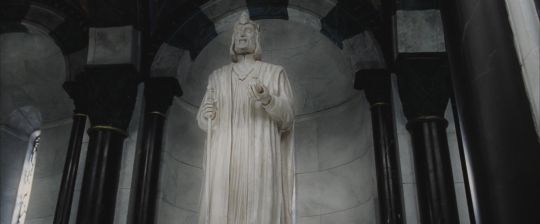
Gondor is way back, and no longer the familiar English or Anglo-Saxon: its design comes from classical Greek and Roman architecture
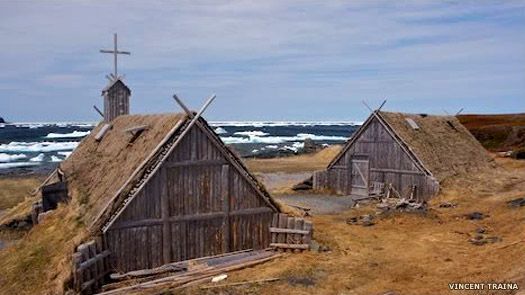
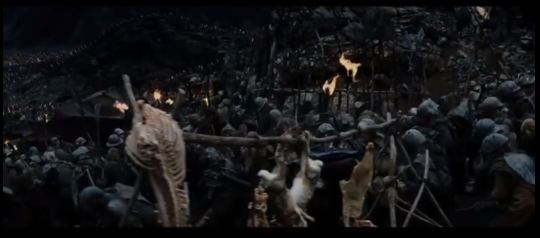
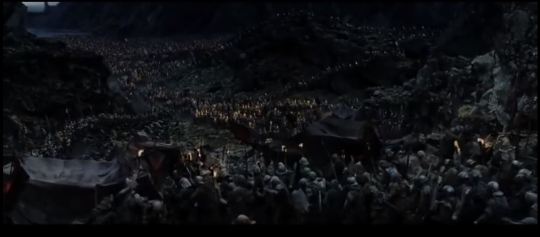
And far far FAR back is Mordor. It’s a land of tents and huts: prehistoric, primitive, primeval. Cavemen times
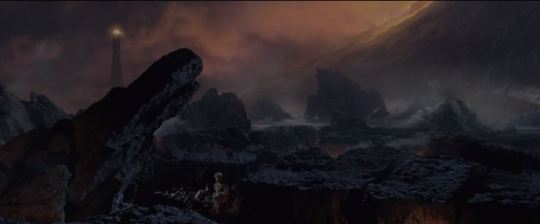
And the heart of Mordor is a barren lifeless hellscape of volcanic rock…like a relic from the ages when the world was still being formed, and life didn’t yet exist
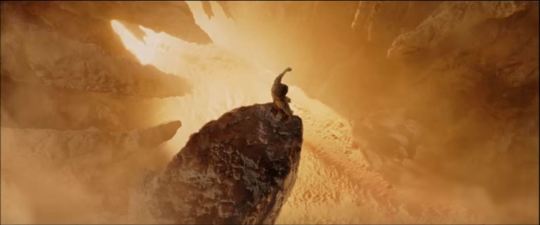
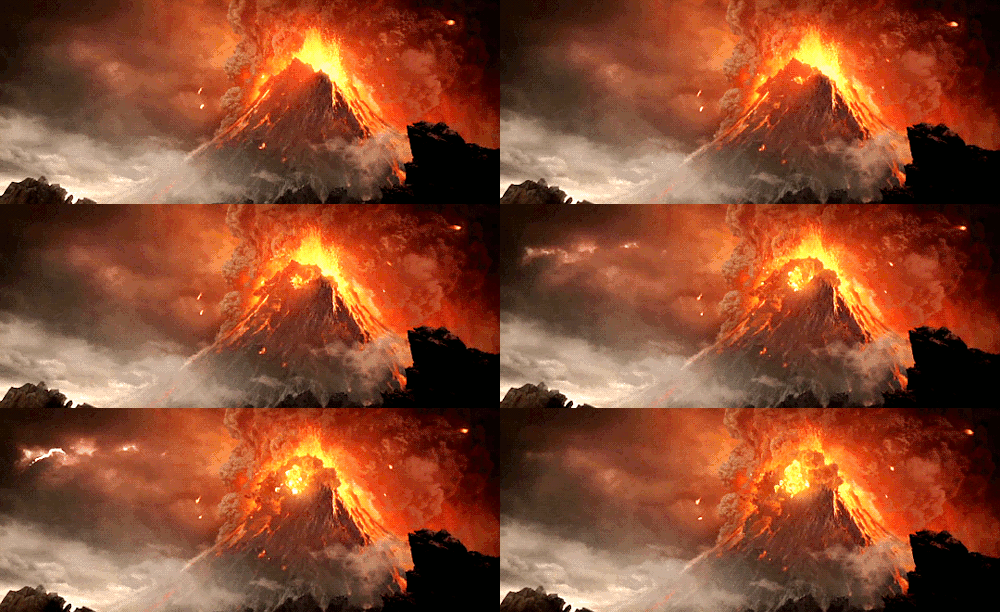
And then they finally reach Mount Doom, which one artist described as
“where the ring was made, which represents, in a sense, the moment of creation itself”
#remember when eowyn thought legolas was aragorn’s boyfriend
the fact that it was supposed to be Aragorn and Arwen at first and that’s what Eowyn is reacting to and then they cut Arwen out of the Helm’s Deep battle and just replaced her with Legolas in every instance is one of my favorite facts about this movie
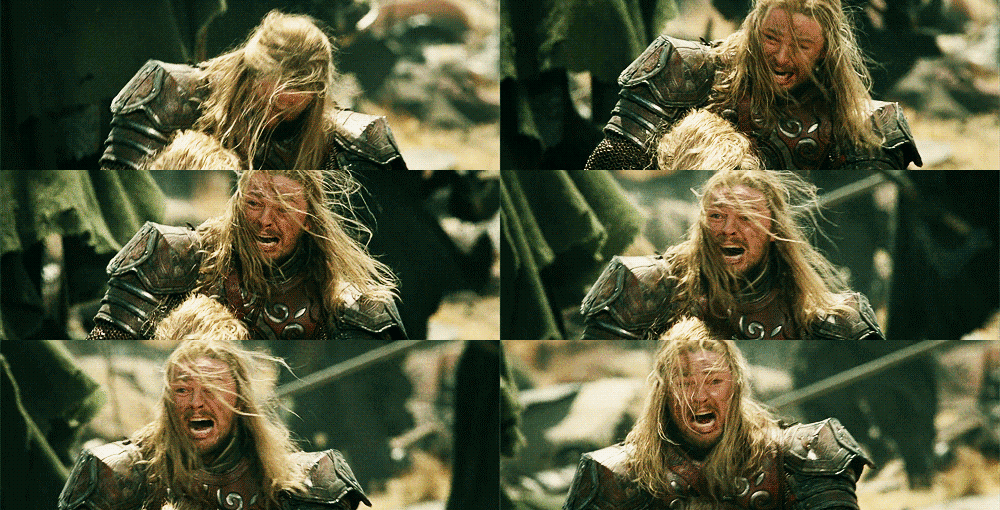
shout out to Karl Urban as Eomer for giving one of the most heart wrenching cries ever produced in cinematic history where you can essentially feel the anguish and shock that he is going through to find that his sister was on the battlefield, and is now injured, presumably dead. words cannot describe his pain.
Think about this for a moment. To him, she was never supposed to be there. She rode out of Rohan in secret with him, while he thought he’d left her – really the only family he has left – safely at home to lead the people.
They also changed his shooting schedule after this shot to add him to some of the scenes where Eowyn was in the House of Healing. They’d expected something more downplayed – shocked, and upset, but fairly stoic, like a stereotypical fantasy hero man – but they said when they saw this display of emotion, they couldn’t imagine him not being there watching over her heal.
One thing that really makes me mad about the movies is that half of the best speeches are stolen from Eomer in the books. Théoden’s warcry of “Death!” at the Battle of the Pelennor Fields was actually made by Eomer after he found out that Théoden had died and he was now in command. He was also smart and charming, but overall the Eomer of the books was emotional and very much listened to his heart over anything else.
Karl Urban is a phenomenal actor, and I really feel like he understood the character of Eomer as he was represented in the books. And I love that.
One overlooked thing that really sets the Lord of the Rings films apart from other franchises is how earnest they are-
Most movies are so afraid of being “cheesy” that whenever they say something like “friendship is the most powerful force in the world” they quickly undercut it with a joke to show We Don’t Really Believe That! 😉 Even Disney films nowadays have the characters mock their own movie’s tropes (”if you start singing, I’m gonna throw up!”) It’s like winking at the camera: “See, audience? We know this is ridiculous! We’re in on the joke!”
But Lord of the Rings is just 12.5 hours of friendship and love being the most powerful forces in the world, played straight. Characters have conversations about how much their home and family and friends mean to them, how hope is eternal, how there is so much in the world that’s worth living for…. and the film doesn’t apologize for that. There’s no winking at the audience about How Cheesy and Silly All This Is; it’s just. Completely in earnest.
And when Lord of the Rings does “lean on the fourth wall” to talk about storytelling within the film, it’s never to make jokes about How Ridiculous These Storytelling Tropes are (the way most films do)…. but instead to talk about how valuable these stories can be. Like Sam’s Speech at the end of the Two Towers: the greatest stories are ones that give you something to believe in, give you hope, that help you see there are things in a bleak violent world that are worth living for
Oh I love this
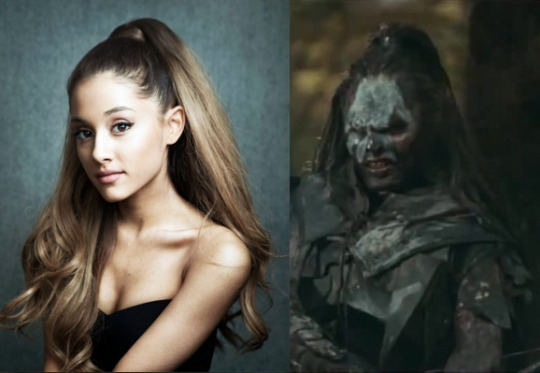
He has the hairstyle of Ariana Grande.
my six-year-old daughter on the uruk-hai Aragorn fights at the end of The Fellowship of the Ring
Most composers spend just 10-12ish weeks working on a film’s music. John Williams spent around 14 weeks on each Star Wars movie, 40ish weeks total for the whole OT……but composing the LOTR trilogy’s soundtrack took four years
The vocals you hear in the soundtrack are usually in one of Tolkien’s languages (esp. Elvish). The English translations of the lyrics are all poems, or quotes from the book, or occasionally even quotes from other parts of the films that are relevant to the scene
When there were no finished scenes for him to score, Howard Shore would develop musical themes inspired by the scripts or passages from the book. That’s how he got all Middle-Earth locations have their own unique sound: he was able to compose drafts of “what Gondor would sound like” and “what Lorien would sound like” long before any scenes in those places were filmed
Shore has said his favorite parts to score were always the little heartfelt moments between Frodo and Sam
Shore wrote over 100 unique leitmotifs/musical themes to represent specific people, places, and things in Middle Earth (over 160 if you count The Hobbit)
The ones we all talk about are the Fellowship theme, the main Shire Theme, and the themes for places like Gondor, Mordor, Rohan, and Rivendell…but a lot of the more subtle ones get overlooked and underappreciated
Like Aragorn’s theme. It’s a lot less “obvious” than the others because, like Aragorn himself, it adapts to take on the color of whatever place Aragorn is in: it’s played on dramatic broody stringed instruments in Bree, on horns in battle scenes, softly on the flute with Arwen in Rivendell….
Eowyn has not just one but three different leitmotifs to represent her
Gollum and Smeagol both have their own leitmotifs! Whose theme music is playing in the scene can often tell you whether the Gollum or Smeagol side is “winning” at the moment
The melody for Gollum’s Song in the end credits of the The Two Towers is the Smeagol and Gollum themes smushed together (it’s Symbolic)
And then there’s the really obscure ones. Like there’s a melody that plays at Boromir’s death that shows up again in ROTK in scenes that foreshadow a major death or loss
Shore wanted the theme music to grow alongside the characters– so that as the characters changed, their theme music would change with them.
You can hear that most clearly in the Shire theme. Like the hobbits, it goes through A Lot
Like compare the childish lil penny whistle theme you hear in Concerning Hobbits/the beginning of FOTR with (throws a dart at random Beautiful Tragic Hobbit Character Development scene because there WAY TOO MANY to choose from) the scene when Pippin finds Merry on the battlefield, where you hear a kind of shattered and broken but more mature version of that same theme in the background
I could write you a book on how much I love the way the Shire theme grows across the course of these films
Unlike the hero’s themes, which constantly change and grow, the villain’s themes (The One Ring theme, the Isengard theme, etc) remain basically the same from the very beginning of FOTR to the end of ROTK. Shore said this was an intentional choice: to emphasize that evil is static, while good is capable of change
Shore has said that between all the music that made into the movies and the music that didn’t, he composed enough for “a month of continuous listening”……..where can I sign up
what she means: the words “christmas tree” are used in the hobbit, and since we know that bilbo is the author of the hobbit, hobbits must have christmas which means there must be a middle earth jesus. but hobbits seem to be the only ones who have the concept of christmas which means it was probably a hobbit jesus. but frodo says in return of the king that no hobbit has ever intentionally harmed another hobbit so who crucified hobbit jesus?? were there other hobbit incarnations of religious figures?? was there hobbit moses?? did jrr tolkien even think about this at all??
Wait wait I might actually have an answer
Tolkien wrote The Hobbit like waaaay before he even dreamed up the idea for Lord of the Rings, so when he DID dream up LotR, he had a whole bunch of stuff that didn’t make sense. Like plotholes galore
Like for example in the first version Gollum was a pretty nice dude who lost the riddle contest graciously and gave Bilbo the ring as a legit present and was very helpful and it was super nice and polite and absolutely nobody tried to eat anyone because this is a story for kids and that’s very rude
But that doesn’t work with LotR, so Tolkien went back and re-released an updated version of The Hobbit with all the lore changes and stuff to fix everything that didn’t work
This is the version we know and love today
BUT rather than pretend the early version never existed, Tolkien went and worked the retcon into the lore
If you pay attention in Fellowship, there’s a bit where Gandalf is telling Frodo about the ring and he mentions how Bilbo wasn’t entirely honest about the manner in which it was found
To us modern readers, this doesn’t make a ton of sense, so mostly we just breeze by it–but actually that line is referencing the first version of The Hobbit
The pre-retcon version of the Hobbit is canonically Bilbo’s original book. The original version with Nice Gollum is canonically a lie Bilbo told to legitimize his claim to the ring and absolve him of the guilt he feels for his rather shady behavior
Then the post-retcon version is an in-universe edited edition someone went and released later to straighten out Bilbo’s lies
So it’s 100% plausible that the in-universe editor who fixed up Bilbo’s Red Book and translated it from whatever language Hobbits speak was a human who knew about Christmas Trees and tossed the detail in to make human readers feel more at home, because that’s the kind of thing that sometimes happens when you have a translator editor person dressing up a story for an audience that doesn’t know the exact cultural context in which the original story was written
Tolkien was a medieval scholar and medieval stories are rife with that sort of thing, so like… yeah
Not only all that, but Tolkien was also working within a frame narrative that he wasn’t the real author, but a translator of older manuscripts; so, in-universe, the published The Hobbit isn’t actually Bilbo’s book, but rather Tolkien’s copy of an older copy of an older copy of an older copy of Bilbo’s book. So when errors and anachronisms came up, he would leave them there instead of fixing them, and he may have even put some in intentionally; what we’re supposed to get from the “Christmas tree” bit is that the first scribe to translate the book from Westroni to English couldn’t come up with an accurate analogue for whatever hobbits do at midwinter.
Yes. Another example of tolkien doing this is him using, for instance, Old High Gothic to represent Rohirric – not because the people of Rohan actually spoke that language, but because Old High Gothic had the same relationship with English that Rohirric had with Westron (Which is the Common Language spoken in the West of Middle-Earth). There’s tons of that stuff in the book.
Like, Merry and Pippin’s real names (In Westron) are Kalimac Brandagamba and Razanur Tûk, respectively (to pick just one example of this). Tolkien changed their names in English to names which would give us English-speakers the same kind of feeling as those names would to a Westron-speaker. Lord of the Rings is so much deeper than most readers realise.
tolkein’s entire oevre is just one epic in-joke with the oxford linguistics department imo
thranduil sleeps calmer knowing even if his son married a dwarf at least he married The Supermodel dwarf and singlehandedly crushed the hopes of single dwarves and dwarrowdams everywhere
this is my headcanon and you will never take it from me.
listen, just Listen for a second, okay.
Gimli Gloinul is from the line of Durin okay, he’s from the line of KINGS, his bloodline stands up against Legolas’ perfectly, if the elves and dwarves got their shit together for a hot second they would be like “YES, PERFECT, A DIPLOMATIC MARRIAGE TO BIND OUR HOUSES TOGETHER AND NEVER SHALL THE TWAIN THROW ONE ANOTHER TO DRAGONS…again.” because you have a king’s son and a king’s nephew which, well, I love Dain but he’s not an EREBOR KING and GIMLI IS FROM THE FAMILY OF EREBOR KINGS.
And Gimli acts like he’s from the line of Erebor kings, too, okay, he’s a diplomat and a warrior and a nobleman, he’s the sort of person who SAYS things like ‘faithless is he who says fairwell when the road darkens’ and stares down Elrond Peredhil in his own home when his strength and faith are questioned. And he’s the kind of person who swears his allegiance to people he barely knows because it’s Right and Good and Gimli knows it.
And Thorin Oakenshield was handsome, and his sister the lady Dis is beautiful, and Gimli’s cousins Fili and Kili were fine young dwarrows, and Gimli’s mother is a great beauty.
Basically my point here is that Gimli, proud strong gimli with his firebeard hair and bold laugh and mithril tongue and clever fingers, broke the hearts of everyone in Erebor and not a few people outside of Erebor when he married a goddamn elf. Like. Not even Arwen Undomiel (WHO MARRIED A GODDAMN HUMAN, it’s been a weird couple of years in Middle-Earth, everyone wonders strongly if they’ve been drinking too much). Like he’s not even marrying a great beauty of the elves, Legolas isn’t ugly by elvish standards but also he’s nothing particularly special, and he’s not a great diplomat, and he’s BARELY a king’s son because everyone knows that Mirkwood elves are…a little odd. Legolas is a big cheerful hunter who sings songs he doesn’t remember all of, who chatters to trees and has no sense of the right thing to say even if he’s developed enough self-preservation to know the wrong thing to say, and FOR THE LOVE OF MAHAL HE FIGHTS WITH A BOW.
“GIMLI” Gloin bellows “YOU TURNED DOWN THIRTY-TWO SUITORS FROM FINE DWARVISH LINES FOR THIS”
“Ignore him, amrâlime, he’ll get over it” Gimli says in amusement as he beckons Legolas over to his forge, where he’s carefully smithing mithril-inlaid gold marriage clasps that will grip fine elvish hair. It’s too hot in the forge to wear shirts, if you’re working. Every dwarf in twenty feet stops what they’re doing to watch Gimli’s biceps flex as he holds up a jewel for Legolas’ inspection.
“YOU COULD HAVE HAD A HAREM” Gloin wails from down the hall.
#a headcanon I never knew I needed until this very moment
I love the art but now I love the headcanon just as much


 myblog