Rita
Levi-Montalcini (1909-2012) was an Italian neurologist who in 1986 was
awarded the Nobel Prize in Physiology or Medicine for the discovery of nerve
growth factor (NGF). She also served as Senator for Life in the Italian Senate
from 2001 until her death at 103.
She studied medicine at the University of Turin and remained there as an
assistant after graduation, but lost her position when in 1938 Jews were barred
from holding academic posts. Nevertheless she set up a laboratory in her
bedroom, and the research conducted there set the basis for her groundbreaking
discoveries. Over the years her work led to the creation of new
anti-inflammatory drugs and a greater understanding of how cancer spreads and
evolves.
Today Google celebrates Shakuntala Devi’s 84th birthday. She was popularly known as the “Human Computer”, was a child prodigy, and mental calculator. She passed away on April 21 2013, she was 83 years old. Her achievements include:
In 1977 in the USA she competed with a computer to see who could calculate the cube root of 188,132,517 faster (she won). That same year, at the Southern Methodist University she was asked to give the 23rd root of a 201-digit number; she answered in 50 seconds. Her answer—546,372,891—was confirmed by calculations done at the U.S. Bureau of Standards by the Univac 1101 computer, for which a special program had to be written to perform such a large calculation.
On June 18, 1980, she demonstrated the multiplication of two 13-digit numbers 7,686,369,774,870 × 2,465,099,745,779 picked at random by the Computer Department of Imperial College, London. She correctly answered 18,947,668,177,995,426,462,773,730 in 28 seconds. This event is mentioned in the 1982 Guinness Book of Records.
Happy birthday Shakuntala!
As if that wasn’t awesome enough, she also (in 1977) wrote The World of Homosexuals, the first study of homosexuality in India. The book, considered “pioneering”, features interviews with two young Indian homosexual men, a male couple in Canada seeking legal marriage, a temple priest who explains his views on homosexuality, and a review of the existing literature on homosexuality. It ends with a call for decriminalising homosexuality, and “full and complete acceptance — not tolerance and not sympathy.”
The book was largely ignored because she was famous for her mathematical wizardry, so nothing of substantial import in the field of homosexuality was expected from her. Also the cultural situation in India was inhospitable for an open and elaborate discussion on this issue.
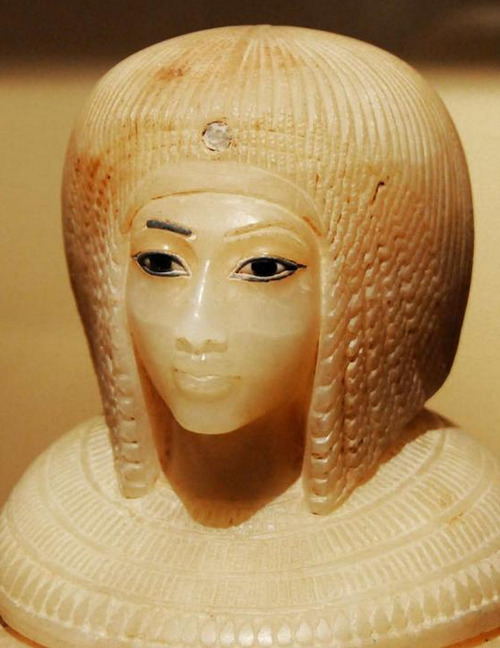
do you want to know something?? I always wondered what the hell kind of hairstyle the Ancient Egyptians were trying to portray with depictions like these
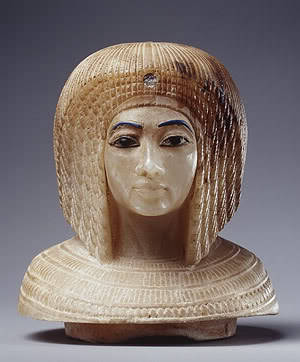
and this
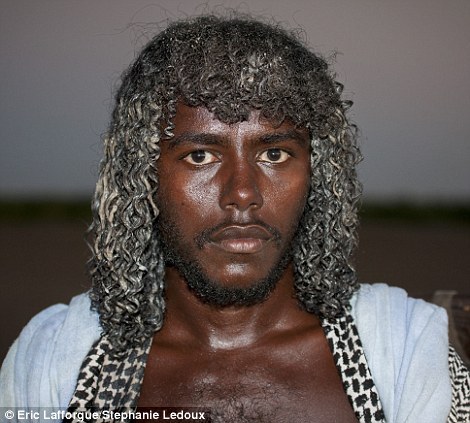
until I did my hair this morning and
oh
welp
you can take the noses off our statues but until you find a way to take Egypt out of Africa we’re still going to find ourselves
I’m reblogging this post without all the salty, racist commentary because I’m sick of looking at it. please spread this around again in its pure form for posterity.
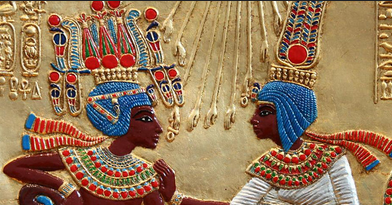
What’s funny is that white people thought they were hats/crowns 😂
And here’s some pictures of the Afar people, who still live on the horn of Africa today.
Cool, huh?
Beautiful
People thought it was Hats and Crowns? How could they not see hair?
The same reason archaeologists, upon finding a woman’s skeleton in the grave of a famous Roman gladiator, immediately wondered where the gladiator’s skeleton was: Old Straight White Man™ brand denial.
The way that we learn about Helen Keller in school is an absolute outrage. We read “The Miracle Worker”- the miracle worker referring to her teacher; she’s not even the title character in her own story. The narrative about disabled people that we are comfortable with follows this format- “overcoming” disability. Disabled people as children.
Helen Keller as an adult, though? She was a radical socialist, a fierce disability advocate, and a suffragette. There’s no reason she should not be considered a feminist icon, btw, and the fact that she isn’t is pure ableism- while other white feminists of that time were blatent racists, she was speaking out against Woodrew Wilson because of his vehement racism. She supported woman’s suffrage and birth control. She was an anti-war speaker. She was an initial donor to the NAACP. She spoke out about the causes of blindness- often disease caused by poverty and poor working conditions. She was so brave and outspoken that the FBI had a file on her because of all the trouble she caused.
Yet when we talk about her, it’s either the boring, inspiration porn story of her as a child and her heroic teacher, or as the punchline of ableist, misogynistic jokes. It’s not just offensive, it’s downright disgusting.
the reason the story stops once hellen keller learns to talk is no one wanted to listen to what she had to say
how’s that for a fucking punchline
It’s not that I disagree that we should all be aware of what a badass Helen Keller became, because she had a long and amazing career as an activist and yes, a feminist hero. It’s that somehow when people talk about the ableism of the way Helen’s story is told they always seem to forget this: Anne Sullivan, her teacher, was blind. Seriously. From Wikipedia:
“When she was only five years old she contracted a bacterial eye disease known as trachoma, which created painful infections and over time made her nearly blind.[2] When she was eight, her mother passed away and her father abandoned the children two years later for fear he could not raise them on his own.[2] She and her younger brother, James (“Jimmie”), were sent to an overcrowded almshouse in Tewksbury, Massachusetts (today part of Tewksbury Hospital). He, who suffered a debilitating hip ailment, died three months into their stay. She remained at the Tewksbury house for four years after his death, where she had eye operations that offered some short-term relief for her eye pain but ultimately proved ineffective.[3]“
Eventually some operations did restore part of her eyesight, but by the end of her life she was entirely blind. Also:
“Due to Anne losing her sight at such a young age she had no skills in reading, writing, or sewing and the only work she could find was as a housemaid; however, this position was unsuccessful.[2] Another blind resident staying at the Tewksbury almshouse told her of schools for the blind. During an 1880 inspection of the almshouse, she convinced an inspector to allow her to leave and enroll in the Perkins School for the Blind in Boston, where she began her studies on October 7, 1880.[2] Although her rough manners made her first years at Perkins humiliating for her, she managed to connect with a few teachers and made progress with her learning.[2] While there, she befriended and learned the manual alphabet from Laura Bridgman, a graduate of Perkins and the first blind and deaf person to be educated there.”
So Anne Sullivan, disabled and born into serious poverty, learns the manual alphabet from a deaf and blind friend; passes that alphabet on to her deaf and blind student. This isn’t the story of an abled-bodied teacher swooping in to ‘save’ a disabled child; it’s a series of disabled women helping each other. Helen Keller’s story is the story not of one badass disabled woman, but of two. Anne and Helen were lifelong friends; Anne died holding Helen’s hand.
Also is there a book called “The Miracle Worker”? I thought that was the movie/movies based on “The Story of My Life” by Helen Keller. But I could be wrong. And I didn’t learn any of this in school in general but that’s neither here nor there.
I can recommend the ‘62 version of “The Miracle Worker” with Anne Bancroft and Patty Duke. It’s blatant about Sullivan’s impoverished background and eye problems – her rage on Helen’s behalf isn’t abstract at all, it’s very, very personal. And that’s the most amazing thing about this movie: Anne and Helen are the angriest people on earth. I have no idea if that was erased from the remakes but in the original they are both allowed to have a ton of anger about what has been done to them and what they have been denied.
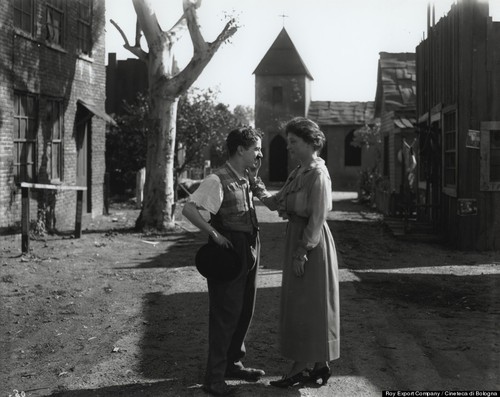
Anyway, I’ve rambled enough. Here’s a picture of Helen Keller meeting Charlie Chaplin:
omfg I am so mad right now because not only did the kids biography of Helen Keller I read when I was younger erase all her activism, but it very explicitly completely erased anything about Anne being blind herself.
There were scenes of her WATCHING Helen from across the room or yard, and it was all very “oh my, I just MUST save this poor little disabled girl, no other deaf blind person has EVER BEEN EDUCATED and basically it was awful and shitty.
I think everyone should read Helen and Teacher. It’s an absolute brick of a book, hundreds of pages, but it is wonderful. It’s about their whole lives, right up to Helen’s death in old age. It talks about Helen’s feminism, socialism, and campaigning for everything from equal rights to sexual health. Helen Keller was not a syrupy, greeting card girl who existed to make able people feel warm and fuzzy, she was a tireless academic, political activist and writer. She was making noise about the issues she cared about from the moment her partnership with Annie Sullivan began, and she never stopped.
Protein World’s ad campaign, which features a woman in a bikini and various products in the company’s “weight loss collection,” asks the question: Are you beach body ready? This has sparked an online backlash in which more than 40,000 people have signed a petition calling for the removal of the ad that’s been deemed body shaming.
The company has insisted there’s nothing wrong with their posters and has “absolutely no intention of removing the adverts because of a minority making a lot of noise.” CEO Arjun Seth said that the people defacing his posters are “terrorists” and that he would only take notice of the petition if it gained one million signatures. [via]
Dove responds to Protein World’s ad campaign with a body positive message x
abbie mills is dead. another woman of color that dies on tv. i wish yall got mad af when a poc dies just as much you people get mad when your white lgbt gets murdered cause bury your pocs has been an issue since the beginning of pop culture








 myblog