Dr. Willie Parker, who is trained as a gynecologist and OBGYN, is a hero for the pro-choice movement because he’s honest about the undiscussed aspects of getting (or not getting) an abortion. Watch how he gives a consultation.
That last statement about regret is so important, because so many people don’t understand what it is or what causes it. Anti-choicers exploit this by manipulating pregnant people and creating doubt, which only increases the likelihood of regret, no matter what decision the pregnant person makes. You know what is best for you, even if it takes some time to figure it out.
Anyone else tired of the 3 guy 1 girl character setup in literally every movie ever?
It’s because at roughly that ratio is where men feel that men and women are represented equally.
There was a study done and when there was 1:1 male/female the male audiences felt as though there were more too many women. In general the men studied perceived things like 3 guys to 1 girl as more representative of the world.
That disgusts me.
There have also been studies in which it was found that men think women talk much more than they actually do – if they have to share equal air time with a woman they think they’re not getting a word in edgewise.
Imagine being so used to privilege and prioritization to think that the equal treatment of others is an unfairness to you.
a crowd scene that is 17% women is considered ‘too much’ when women are half of the population.
Artemis: *lounging by a spring on piles of deerskin surrounded by three dozen naked girls with a dead pan expression* Virginity.
“Heracles, they’re lesbians”.
Note that the concept of “virginity” in Ancient times merely meant “unmarried”, and had nothing to do with sexual activity. Some priestesses were “virgins” because they chose (or were committed to) a life of worship, but it was merely a question of social status, not of personal choice or practice. Of course, one can suppose that this lifestyle would be rather attractive for lesbians.
So when Artemis is said to be the Goddess of Virgins, it is meant to be understood as “Goddess of Unmarried Women”, or, quite possibly literally, of lesbians.
(It’s only Christianity that reframed the concept of virginity to mean “never had sex”. Many ancient religions has “Virgin goddesses”, which symbolized feminine power, and in this case too it meant “untied to a man”, or “whole for herself”)
happy pride everyone im enlisting your help to convince my girlfriend to be the bee movie with me for halloween we have 5 months to change her mind let’s go… gay rights!!!
Cave woman would have not known about the menopause until the life expectancy increased. Maybe there is another human hormonal change that we are not aware of as we have not reached the particular age it happens.
Totally incorrect! Actually, the fact that human females live past their reproductive life span is responsible for a great deal of human evolution, especially the ways in which we differ from our close ape relatives. This is called the Grandmother hypothesis.
Let me explain.
So the idea that human life expectancy has increased due to modern advancements is a myth. The average life span has certainly increased, however this is not because humans live longer (we have always lived to around 70-90yrs), but because infant mortality has decreased. In other words, modern medicine and abundant access to resources have decreased how how many children die, therefore increasing the average years humans live past birth.
So, Humans have known about menopause since the beginning, and it’s actually a huge part of our evolutionary history. Other apes do not live past their reproductive life span, as their bodies degrade shortly after ceasing to be fertile- evolution is all about how many offspring can be produce after all. Its generally a waste of resources to continue feeding adults who cannot reproduce when fertile adults and children are competing for those same resources.
So the fact that human females live for upwards of 30yrs past fertility was considered an evolutionary paradox. The key is that humans are really smart (sort of). We require a very long time to develop our brains, and so our infants are completely useless- unable to evan walk for a year, much less feed or protect themselves until middle childhood. They require a lot of attention and caring for, constant vigilence, not to mention hours spent teaching them basic survival tasks.
As a result, humans developed cooperative childraising systems, in which members outside of the child’s immediate family are responsible for caring for the young. However, if all the adults are busy raising their own children, no one would ever care for anyone else’s, except the older, not-yet-fertile children (who do assume childrearing roles, but are still developing and therefore are not good at it.) As a result, the females who stayed alive past their reproductive life span, no longer responsible for their own children, were able to care for the children of their children, allowing for their genes to be passed down more successfully. This creates a positive feedback system in which females lifespan progressively increases, since the older the grandmother, the more children the mother is able to have, and the more successfully they will be raised to adulthood, passing on the genes for long life to their children in turn.
This effect however decreased with subsequent generations: it’s less economical to have a grandmother AND a great grandmother taking care of the young. The payoffs aren’t high enough to push our lifespans even higher.
Tldr; humans have always had unusually long lifespans BECAUSE menopause occurs, and this is an integral aspect of our evolution, causing us to be as intelligent and adaptive as we are.
Even better, one of the ways we know about the grandmother effect is because you also see it in orcas! They can live to 80, but generally stop breeding in their 30s. There are three known species that have this kind of menapause– us, orcas and the Short-Finned Pilot Whale (also another very social species).
There’s a really nice explanation on this article:
So a few years ago I was working with a nutrition project in Mali targeting child malnutrition. A lot of these kinds of programs target young mothers for nutrition education, because women are the ones who cook, mothers feed their kids, makes sense.
Actually, these folks found that it was most effective to target not mothers, but grandmothers. Because in the big extended families most Malians live in, the grandmothers have more influence, so they can negotiate a better distribution of food. Usually, everyone in the family eats out of one big bowl (or a handful of big bowls, because sometimes families are 50+ people). The men always eat first, then the women and kids, so the men get all the good bits of meat that were in the stew. Because “they’re working in the fields more so they need more food.” This is a tricky thing to change, and young women have very little influence over intra-family dynamics. Older women, though, can organize their sons, can talk to their husbands, often control meal planning and budgeting, so if you help them understand that actually, kids need more nutritionally dense foods because their stomachs are smaller, so giving them the leftovers all the time isn’t good enough… then you’re more likely to see actual change in kids’ diets and health.
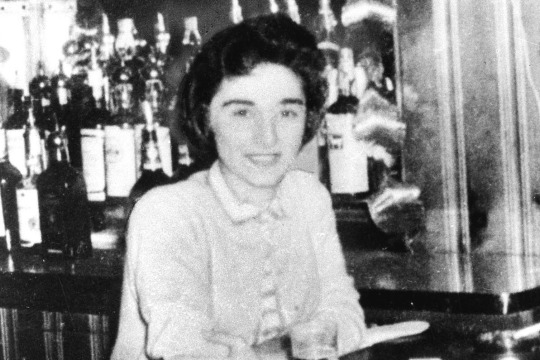
I was told by my professors that Kitty Genovese was a 28-year-old unmarried woman who was attacked, raped, and brutally murdered on her way home from her shift as manager of a bar. I was told that numerous people witnessed the attack and her cries for help but didn’t do anything because they “assumed someone else would”. Nobody intervened until it was too late.
Now… is it likely that people overheard Kitty’s cries for help and ignored them because they thought someone else would deal with it? Or, perhaps, did they ignore her because they knew she was a lesbian and just didn’t care?
Maybe that’s not the case. Maybe it was just a random attack. Maybe her neighbours didn’t know she was gay, or didn’t care.
But it’s a huge chunk of information to leave out about her in a supposedly scientific study of events, since her sexuality made her much more vulnerable to violent crimes than the average person. And it’s a dishonour to her memory.
RIP Kitty Genovese. Society may only remember you for how you died, but I will remember you for who who were.
this was one of the first lessons I had in psych too and we were never told about this either nor was it in any of the reading materials
I never knew this.
I also never knew this about Kitty Genovese, but I do know that, in fact, many of the dozen (not thirty-eight) people who witnessed some part of the attack (which took place after 3AM, on a chilly night in March when most people’s windows were closed) tried to help in some way.
One shouted out his window for the attacker to leave her alone, which did successfully scare the man off temporarily.
Another called the police but, seeing her still on her feet, said only that there had been a fight but the woman seemed to be okay.
And when Kitty Genovese was finally attacked in a vestibule where she couldn’t be seen from outside, Karl Ross, a neighbor, saw what was happening but was too frightened himself to go to her rescue–so he started calling other neighbors to ask what he should do. Eventually one of them told him to call the police, which he did, and the woman he called, Sophie Farrar, rushed out to help Kitty even though she didn’t know whether the attacker was gone.
Kitty Genovese died in the arms of a neighbor who tired to help and comfort her while they waited for the police and ambulance to arrive. Kitty was in fact still alive, although mortally wounded, when the ambulance reached the scene.
The man who saw the final stabbing? Who panicked and called other neighbors first instead of the police? The man who said, infamously, that he “didn’t want to get involved” because he was reluctant to turn to the police for help? He was thought to be gay himself. He was a friend of Kitty and Mary Ann’s. After being interviewed by the police he took a bottle of vodka to Mary Ann and sat with her, trying to comfort her.
So, no. I don’t think the evidence indicates that Kitty Genovese’s neighbors let her die because she was a lesbian, because Kitty Genovese’s neighbors tried to help.
(Also, going by the content of the murderer’s confession, it was indeed a random attack.)
how on EARTH was this “scientifically” studied but the details gotten so wrong and the wrong as hell conclusion published and taught in schools?!?!?! where were those scientists observation skills?! on vacation?!
How to take facts and turn them into an urban legend that gets taught in schools: Make a bad made-for-t.v.-movie about it, watch it, believe everything the movie says, annnnnnnd go! That’s how it gets taught as this supposed “scientific study.” Someone got fucking lazy.





























 myblog