So someone asked me a million years ago to elaborate on what I’d do with a Wonder Woman TV show and I had an entire sub-section planned on “How do you solve a problem like Steve Trevor.”
This is definitely a better solution than anything I had considered.
In fact I’m even tempted to say we should do a whole run where he’s still her love interest despite this. Just, all of him, in aggregate, whichever one happens to be there. If one dies she freaks out and mourns and it’s like a South Park Kenny thing, she’s just back with the next one the next day. Her reaction to him never changes no matter who he is, like she doesn’t even notice he’s a person, he’s just a specific role in her story that could be filled by a sexy lamp if need be. See how uncomfortable we can make Grant Morrison.
my friend’s sister is an animal behavioralist and said that the reason aren’t many lesbian penguins because girl penguins don’t traditionally do mating rituals and just wait for their mates to come to them so really there’s no difference between lesbian penguins and lesbian humans
An increasing number of South Korean women are choosing not to marry, not to have children, and not even to have relationships with men. With the lowest fertility rate in the world, the country’s population will start shrinking unless something changes.
“I have no plans to have children, ever,” says 24-year-old Jang Yun-hwa, as we chat in a hipsterish cafe in the middle of Seoul.
“I don’t want the physical pain of childbirth. And it would be detrimental to my career.”
Like many young adults in South Korea’s hyper-competitive job market, Yun-hwa, a web comic artist, has worked hard to get where she is and isn’t ready to let all that hard graft go to waste.
“Rather than be part of a family, I’d like to be independent and live alone and achieve my dreams,” she says.
…
When I put it to her that if she and her contemporaries don’t have children her country’s culture will die, she tells me that it’s time for the male-dominated culture to go.
“Must die,” she says, breaking into English. “Must die!”
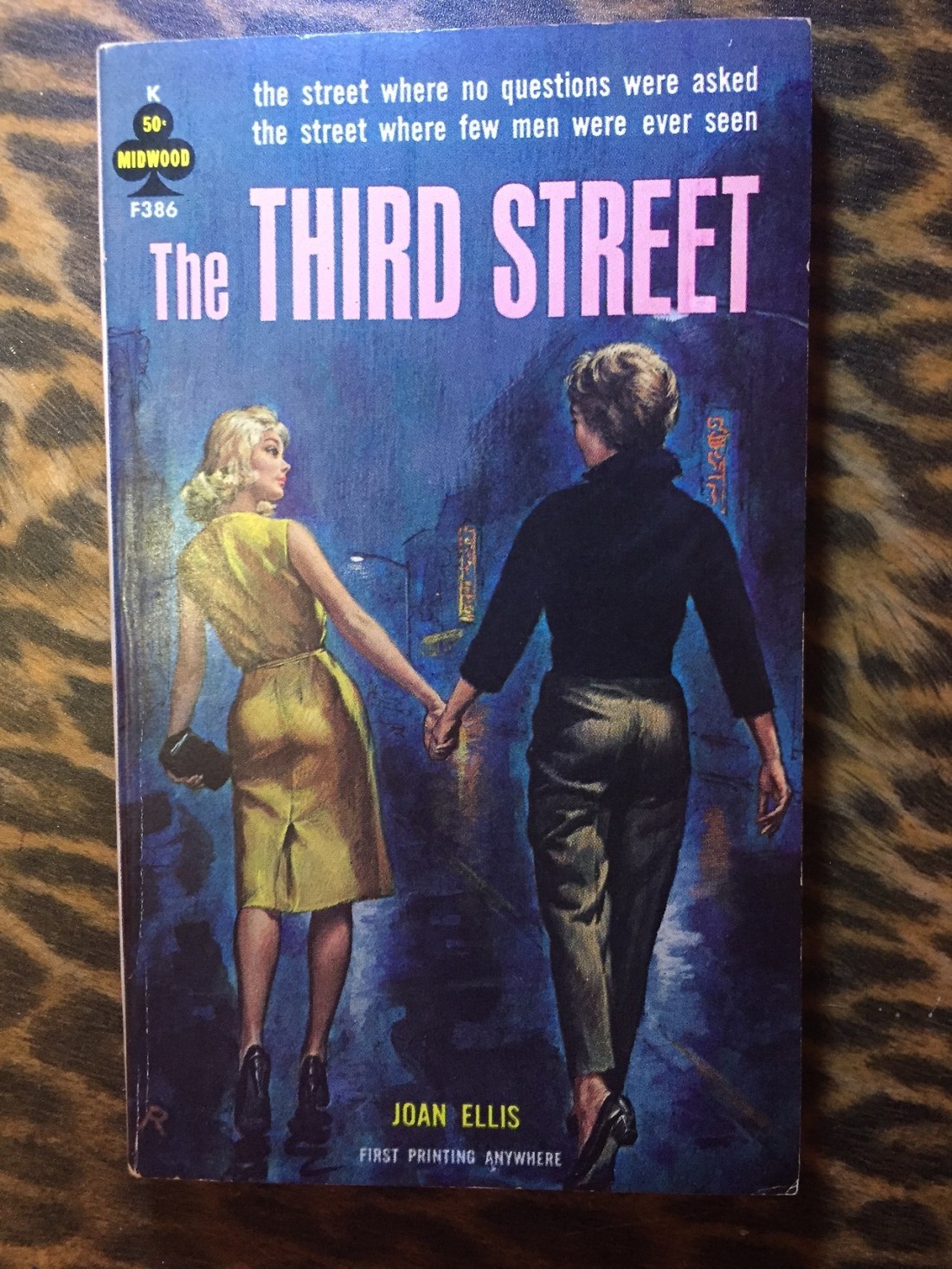
“the third street” is a lucky find whether for a contemporary collector/archivist or for the lesbians who lived at the time of its publishing: 1964
an obvious, if still conservative, example of a butch-fem couple, this simple and somewhat drab cover nonetheless holds interest in the fact it appears the fem is the one leading her butch down that murky “third street”, when convention dictated the butch must always be corrupting the fem. I also love this cover because it is overt in its lesbianism. the title refers to the term “the third sex”, commonly used throughout the twentieth century to refer to lesbians as well as all other gay and gender non-conforming people. the art is daringly direct, the representation of the butch and fem unmistakable and inherently charged with sexual chemistry. despite the heels, the eyelashes and the far too form-accentuating women’s clothing, the suggestion of butch is obvious and convincing enough for the average clueless heterosexual reader…
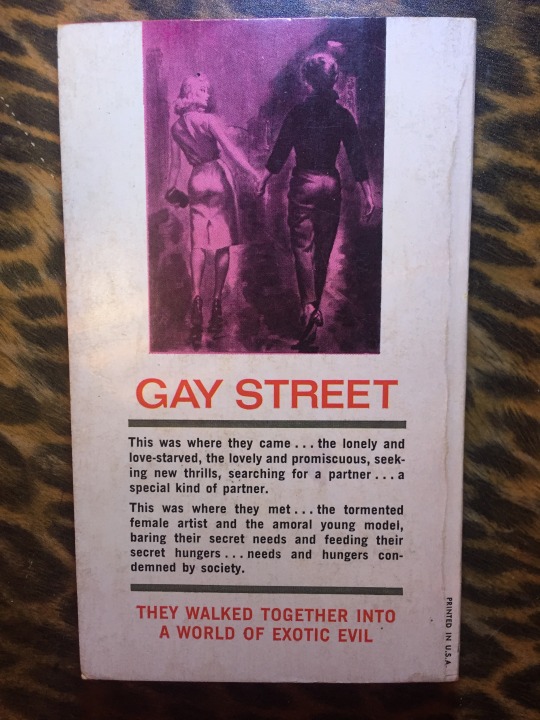
just in case you weren’t sure what the title refers to, the back cover clears it up there.
I expected that, as with the last pulp fiction I shared, adam and two eves, the content within would have little to do with the cover art and this would be another dreary tale of fickle experimentation that finally gave in to heterosexual conformity.
I was wrong.
the first note of authenticity came in the realisation that one of the two central female characters, pat, is most definitely butch. this is coyly dealt with, but obvious to any lesbian looking closely in the effort to find a meaningful reflection of her people. pat’s lovers are highly feminine and she is subtly positioned as a foil to that energy. the nature of her desire is described as active and fierce. her large hands and taller physique are often referred to.
the way a butch was described in those days. reading between the lines is essential.
later in the book, her girlfriend karen reflects on how different pat looks dressed for work and how special it is that she gets to see pat at home without makeup and in her own clothes, as herself. I wonder about this manuscript and how it was changed in the editing process (not that this was ever done exhaustively in pulp fiction) – were the descriptions of butchness more defined in the author’s first draft? was she (and I am almost sure it was she) compelled to change her vision according to a publisher’s demands? was it done without her knowledge, pumped through the factory line of mass production, a few hasty cuts, some modified sentences? or had she been deliberately subtle – maybe even timid – considering the world around her?
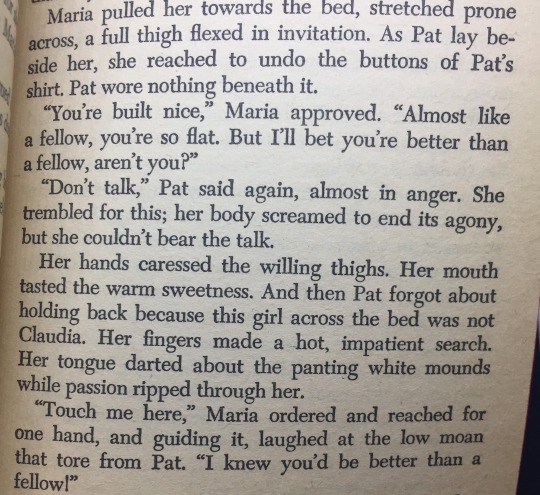
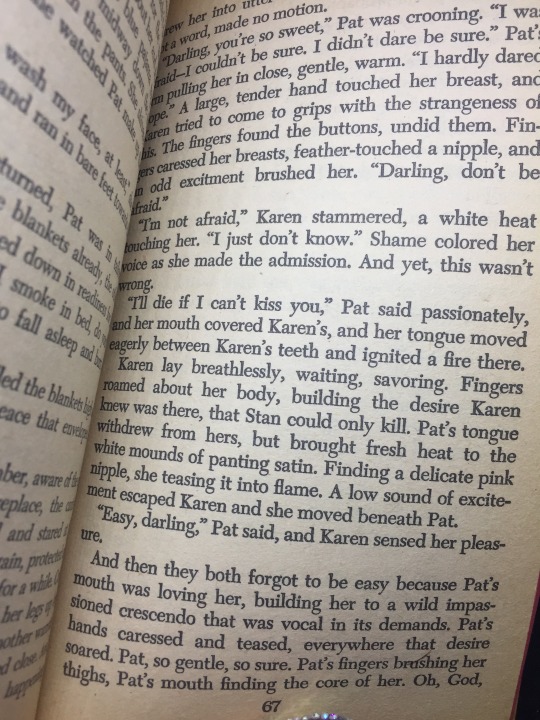
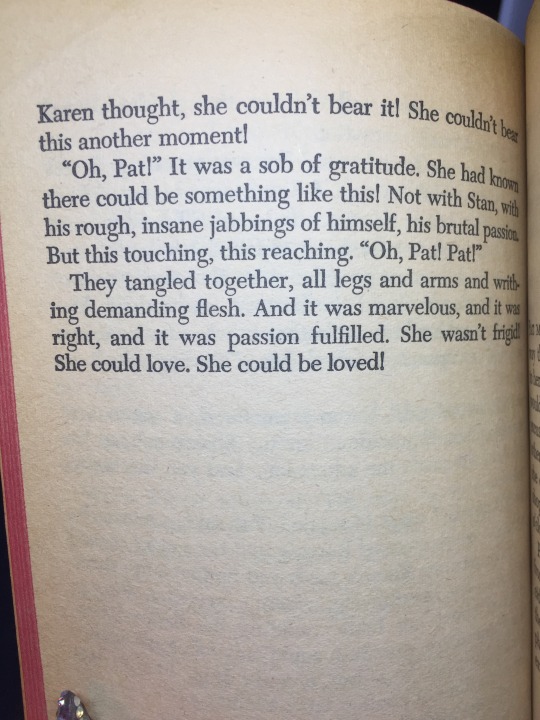
there is an early love scene that also serves to illustrate pat’s butchness through her seduction by a voluptuous young model:
as I flicked through the pages, seeking confirmation of what I suspected, I began to realise this book’s worth lay in far more than an appealing cover. the butch-fem art had been irresistible to me, but I had never guessed I might’ve found an authentic lesbian love story.
pat is an artist, a butch lesbian who has just had her heart cruelly broken by a former lover. karen is an unhappily married young woman with an abusive husband, desperately seeking escape. the two meet when karen models for pat, in need of money, and quickly become close friends. and without much ado after that, they become lovers.
hands up everyone who thought they were frigid before they realised they were just gay
the love scenes in these old pulp fictions are nearly always obviously for titillation of male readers, written in a way that is not explicit but somehow lurid nonetheless. but there’s a difference to the love scenes in this book – though not any more competent, there’s the presence of a tenderness and an earnestness that is often missing. a more intimate sensibility that speaks to what the characters are experiencing, not what the reader might be feeling. convinced as I became that this book had been written by an actual lesbian, I let go of my critical mind and considered what these love scenes might have meant to a lesbian in 1964, who desperately needed something uplifting and affirming of her desire. I remembered what it had been like before I came out, when I had been constricted with need for other women and desperate for material that spoke to that. and I remembered the exquisite joy of finally kissing a woman, of melting into each other. I found myself with a thumping heart and flushed cheeks. there are so many ways that history can live in us.
still, the end of the book filled me with anxiety. I knew what to expect. regardless of what had come before, it would be typical of this genre for karen to have a change of heart, to return to security and stability with men, leaving pat broken and miserable in her life of “exotic evil”. these endings were often contrived and an abrupt change in direction. there was no relying on the bulk of the story to guide the outcome.
except, here again, I was wrong.
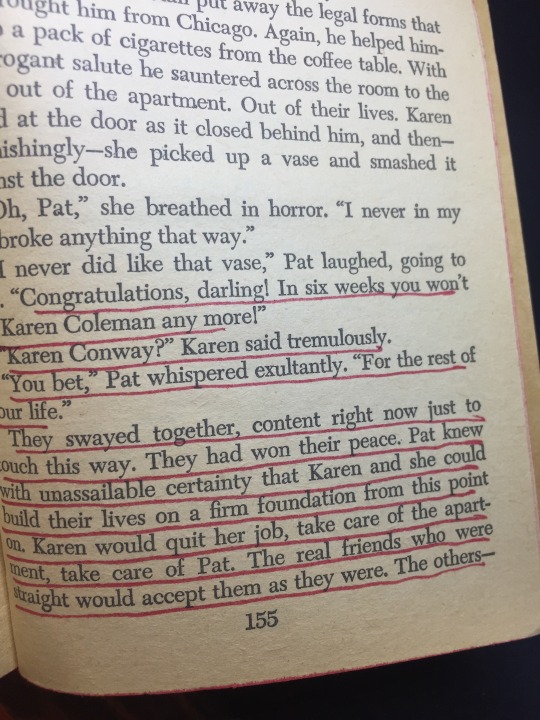
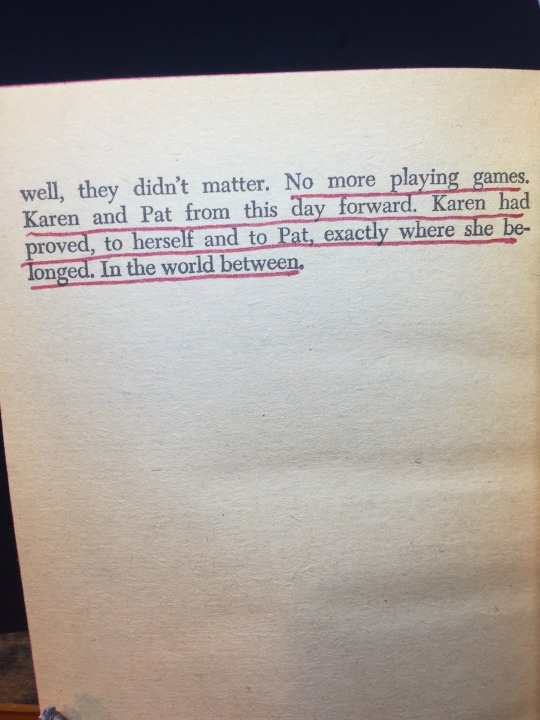
karen dumps her abusive ex-husband once and for all and she and pat look exultantly forward to their new life together. ‘conway’ is pat’s last name – essentially, this book ends in marriage for these two women, which is surely one of the most extraordinary conclusions for a cheap pulp fiction novel published in 1964 and available for $0.50 at the local drug store.
I look at the lines made in red, emphasising this unusually happy ending, and wonder about the person who made them, and why. was she the first person to own this book? the second, the third? did she read this book alone, lonely and aching, and take comfort here? or was she living out and proud, loving other women and finding delight in a rare example that affirmed the brave choices she made? did she make these underlinings for a friend she shared this book with, a penpal maybe, another woman with whom she exchanged promises of love and passion? was she even a lesbian herself? how could she not have been, and still draw those lines beneath pat and karen’s unlikely triumph? how many hands has this book passed through, and what has it meant to them? although coloured by age, the spine is only cracked in a couple of places and the cover and pages are basically intact and unmarked. just those lines of red underscoring the possibility of happiness and self-actualisation. it meant something to me, to see them and know someone else was just as happy to read those final paragraphs as I was, and at a time the stakes were considerably higher.
considering the content of this book, it brings new meaning and depth to the cover art. the absence of overt titillation becomes distinct – there is no cleavage on display, no salacious suggestion of imminent sex. not even their bottoms have been luridly exaggerated. nor is there any trace of distress or conflict, essential elements in lesbian pulp fiction cover art if sex did not play the major role. instead there is simple, frank romantic intimacy in the way their hands are clasped together, the way the fem looks back at her butch with an encouraging smile, leading the way.
in the book, karen briefly struggles against the realisation of her lesbianism, testing herself to see if this is the life she wants, if she truly cannot be satisfied with the world of men. but in the end, she wholeheartedly embraces the truth of her nature and her desires and finds a fulfilling and authentic love with pat. the cover art now reflects this journey, showing us that karen is not afraid of being true to herself although it is socially condemned, that in her search for happiness she will stride forward into the unknown, bold and brave as countless fems before her and since, proudly showing our butches we walk alongside them – and before them when they need us to.
even the title has new significance – “the third street”. karen and pat are not presented to our gaze – and most especially not to the male gaze – but turned from us, hand in hand, heading down that titular street. in 1964, women had two choices – marriage or spinsterhood. but here we see another way, a third way. an alternative path that lesbian women can take together and find love and happiness, a way to be fulfilled outside the conventions of society.
none of this would have been intentional. the artists were unlikely to have read the books before painting for them. they were probably given direction or a brief of some kind. it was a very rare publisher that had any genuine care for the content of these books or how they were represented. the bottom line was the objective, and pulp fiction was churned through production. but taken as a whole, this book is a gift from the past, a glimmer of defiant hope in a medium that routinely crushed it.
so who was joan ellis? this poston pulp curry suggests the name was a pseudonym used by multiple authors, and considering many of “joan’s” other titles are pure sleaze, this is possible though not definitive. regardless the writer of third street was a real person who penned a story of two women falling in love and rising above the odds to make a happy life for themselves. she wrote this book for a reason. and, in doing so, created new meaning for the lesbians who would go on to read it.
I might never find out the true story behind joan ellis. but this book is a testament to the significance of our individual lives and how each of us contributes to a living history that constantly interacts and develops around us. the hope that this book would have given to many of its readers, and its power to reach across decades and share with us a sensitive insight into another lesbian’s efforts to change the narrative set for us, should not be easily dismissed. every effort made by the lesbians who went before us to live their lives bravely and openly has given us the freedom we have today. and through our own efforts, no matter how small or seemingly incidental, we build a new future for those who will come after us.
[image description: a photo of lesbian pulp novel The Third Street by Joan Ellis, showing two women walking down a dark (rainy?) street holding hands. The blonde woman in a yellow dress is walking ahead, looking back at the women with short hair wearing dark pants and a jacket. The text on the front cover reads “the street where no questions were asked / the street where few men were ever seen.” Other image descriptions below the Read More.]
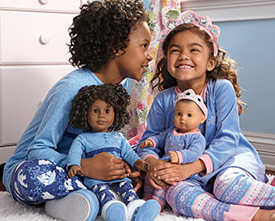
oh yeah and i can’t believe it’s taken me this long to bring this up but i’m absolutely not here for people shading the “american girl today”/”my american girl” line because
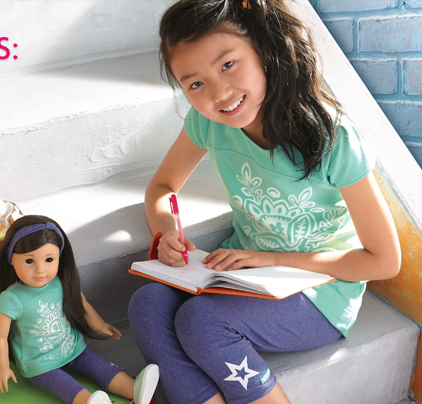
the line literally enables girls to create a doll that looks like them
including a wide array of non-white skin tones and non-european features
like black dolls with curly and textured hair
or asian dolls that appear to have epicanthic folds
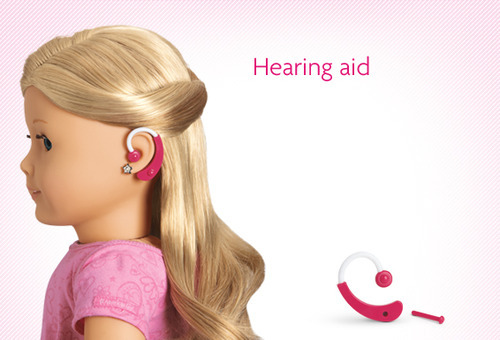
and they’ve also released accessories like doll-sized wheelchairs, hearing aids, and crutches so that girls who aren’t able-bodied or are hard of hearing can have a little friend who shares their experiences
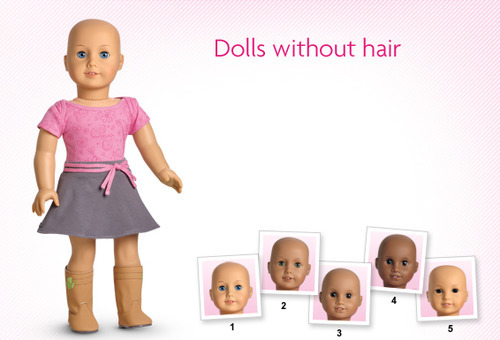
and they’ve even begun to offer dolls without hair for little girls who have alopecia or have lost hair while battling cancer
and basically if you don’t think that’s the tightest shit then get out of my face
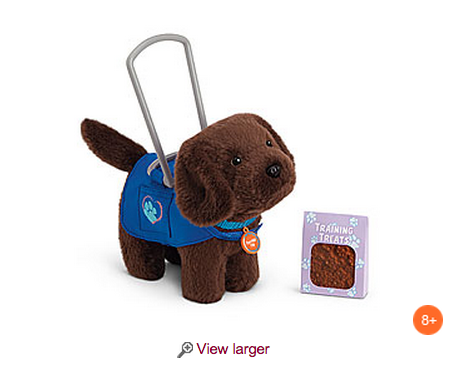
Also: SERVICE DOGS.
IT’S SO CUTE IT EVEN HAS TRAINING TREATS. You go American Girl.
They also consulted the Nez Pierce when making their Kaya doll and that’s why her smile doesn’t show teeth, among other things, and they’ve released some beautiful, and accurate, modern Powwow regalia for her.
Also they’ve been offering all this stuff since I was still getting the catalog. I just turned 29, so if I’m going to guess, that means they’ve been offering these options since at least 1996ish.
You deserve the worst type of karma if you steal from innocent, hard working people
the fact that there’s a symbol that specifically means, vulnerable female easily cornered, which probably means they plan to commit sexual assault as well as burglary, is especially disgusting.
should do like Scheherazade and make every single mark on every single house so they all become meaningless
Even when pharmacists do let people access contraception, whether emergency contraception or condoms or prescription birth control pills, the process isn’t always free of judgment. In a series of recent online discussions, people across the country have begun to share stories of the stigma they’ve experienced. As many have pointed out, this can be especially damaging to teens.
DO YOU SEE THIS? PHARMACY EMPLOYEES IN THE U.S. ARE NOT LEGALLY ALLOWED TO DO THIS. THAT GOES FOR THE PEOPLE AT THE FRONT AS WELL AS PEOPLE IN WHITE COATS BEHIND THE CAGE.
If an employee in a pharmacy makes a snide comment – Front store workers, pharmacists, or Pharmacy Techs give you shit? Gently (Or not so gently) remind them that the waiver they signed upon being hired legally binds them from commenting on your purchase, as it is a violation of privacy laws. Doing so is grounds for INSTANT termination and hefty fines.
Pharmacy workers (white coats) are legally obligated to ASK if you need an explanation of how medication works and any side effects, any medication conflicts etc. If you decline, THEY ARE NOT ALLOWED AT ALL TO MAKE SNIDE REMARKS OR FARTHER COMMENT ON YOUR PURCHASE. FRONT STORE EMPLOYEES CAN NOT AT ALL COMMENT IN ANY WAY, IN ANY STORE WITH A PHARMACY IN IT.
Know your rights. If this shit happens? Call them the fuck out and ask to speak to a manager. Get worked up. Cause a scene. Threaten a Lawsuit. If you see this happening to someone else, and they seem to be struggling, speak up for them.
As a Pharmacy worker, you bet your ass I’ll protect you and your privacy. IT’S MY JOB.
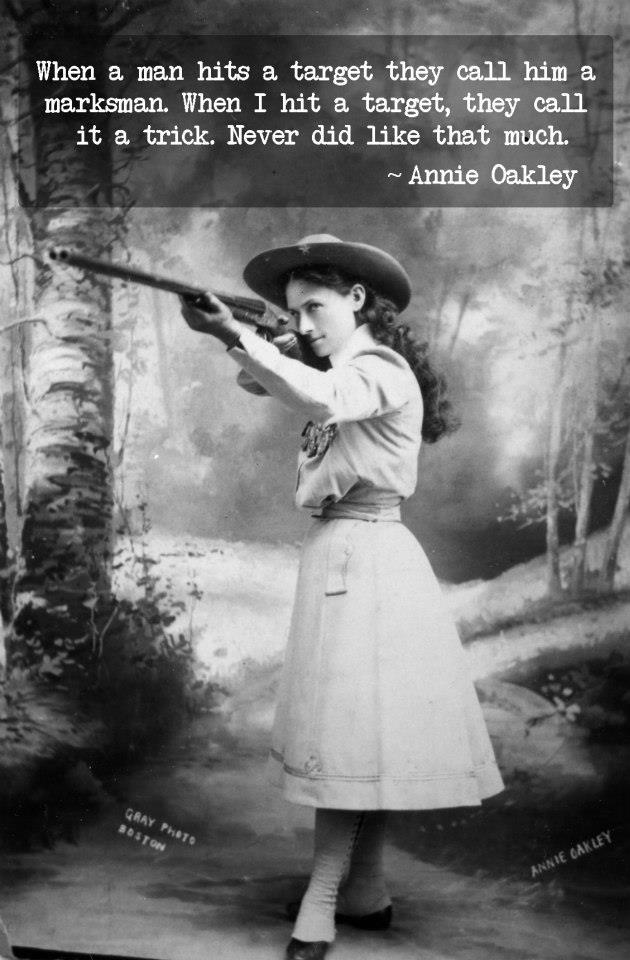
“Never did like that much,” is a baller and superb way to express your irritation with the way the patriarchy refuses to acknowledge how badass you are.
Word.
Before World War I, she shot a cigarette out of the mouth of the Kaiser of Germany at his request.
After the war started she sent him a letter asking for another chance, as she was afraid her aim might’ve been a little off.
















 myblog