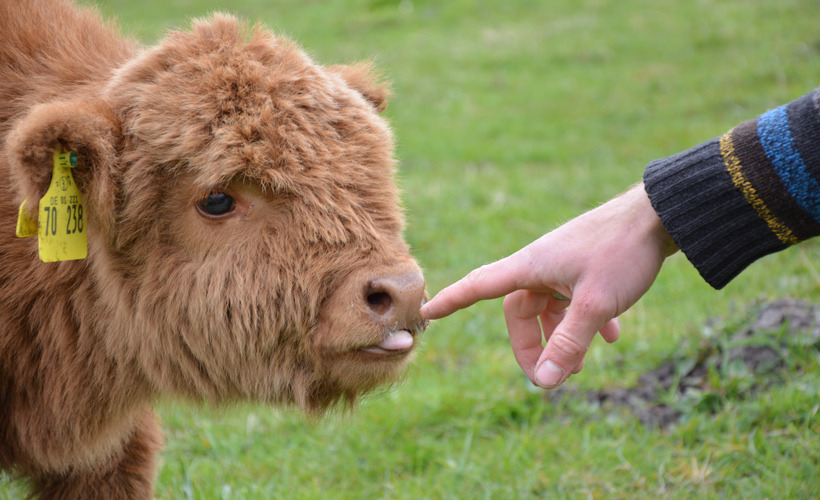
cows are so cool you know. their noses are pink and wet almost like a puppy and they have sandpaper tongues like cats. theyre eveyrthing you could ever want
so much love to give if you will just accept it into your heart…..
Just got done reading an interesting article about how language affects the way we think and perceive the world. There were some interesting examples. Like how in Spanish, the word bridge is masculine, while in German, it is feminine. So native speakers of these languages describe the same thing differently. Spanish speakers will comment on how strong or sturdy a bridge is, while German speakers will comment on how elegant or beautiful it is. Another example that blew my mind was the Guugu Yimithirr language. So, most languages, including English, use an egocentric type of directional language (turn right, left, behind, in front.) these directions are relative to you as a person. Well, the Guugu Yimithirr language uses fixed geographical directions (North, East, South, and West) no matter the context. If you were to put an English speaker and a Guugu Yimithirr speaker in the same hotel, and put them in rooms opposite sides of the hallway from each other, the English speaker will see the exact same room (that person will see the desk to the right of blah and the closet in front of blah) but the Guugu Yimithirr speaker will see a COMPLETELY different room because the bed will be facing south instead of north, and all of that jazz. And the article went on to state how speakers of this language might even have a lower sense of egotism, because directions do not revolve around them, they’re just another part of the picture. Really fascinating. It made me think really long about language imperialism and how rapidly we’re moving towards a world that deals almost exclusively in English. It makes me sad to know that we’re losing completely different ways of thinking. Completely different perspectives, just gone. I guess that’s why I always get upset when people say that language imperialism isn’t so bad, and that English as a language is connecting people together. The world is a great big place, with completely different perspectives, and I think the fastest way to kill a culture is to take away the language, because not only are you taking away a method of communication, but a way of thinking.
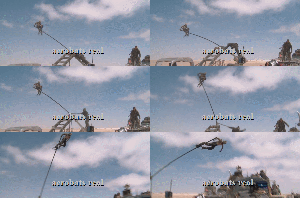
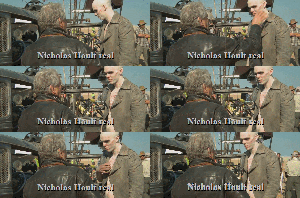
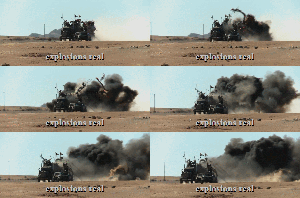
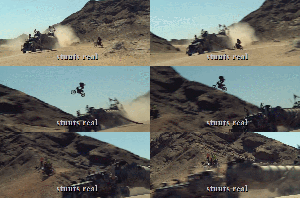
Just some impressions from the making of Fury Road to remind you that they used as less CGI as possible. Thank you George ♥
George Miller the realest person you’re ever gonna meet.
are you fucking kidding me that was two straight hours of ACTUAL EXPLOSIONS
The best part is that, from my understanding, there were quite a few scenes where George Miller said “No this is too dangerous we’ll do this in post” and the rest of the crew was like “NO LETS DO IT NOW WE CAN DO IT”
are you telling me this was fucking cirque du soleil in the desert with fucking explosions
Tom Hardy described it as slipknot meets cirque du soleil
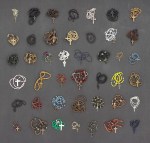
This is worse. Looking at these you can tell they have no significant monetary value. They were confiscated as a fear tactic. Nothing more.
This picture breaks my heart everytime it appears in my dash. It’s a fear tactic, alright but—
The first one in the left corner: It’s a first communion rosary, and it’s not cheap.
The black one in the first line: That’s a widow rosary and it’s old.
The white one in the second line: is a commemoration rosary. It has a miniature picture in the round part. I haven’t seen that since the 70′s.
In the third line, multicolor one: It’s an Anima mundi, I have only seen those in the hands of Rosary ministery’s old ladies. The oldest ones are from the 80′s after Juan Pablo II came to Mexico for the first time. It’s one of the old ones, I know because the crucifixes are different.
The third one on the fourth line: Red and gold. The style is old, the metal is dark, that’s a 50′s rosary, probably a quinceañera one (or it’s maybe older, from the 40′s when the brides carried red roses with their offerings).
The fifth one on the fourth line: It’s a quinceañera rosary with Ignatius’s tear. The style is old and in my part of Mexico is orphan girls who used it. At least it was when I was young.
The third one of the fifth line: the blue one with the anchor. That one I have only seen in Veracruz and it doesn’t look new.
The fifth one on the fifth line: That’s a 90′s wedding rosary. Black and white patterns were popular on that date.
The fourth one on the last line: That’s a first communion rosary from the 30′s. It’s delicate and most probably silver.
The rest wrench my heart too, the humble everyday rosaries with wooden beads and knots. Those are cheap and bear the wear and tear of their user handling. But those I described are much more.
Those are mother’s rosaries.
Those are not just rosaries. Those are mementos, that’s the proof of their families stories. They are taking from them the only portable things they can carry to feel the connection to their families.
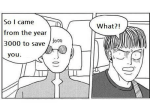
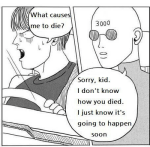
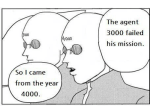
me nervously opening an email i just got from my old creative writings class teacher titled Class Isn’t Over Folks that he sent at exactly 1:25am in the morning on a Monday
what the fresh hell
this is such a golden opportunity omfg i need to know what happens next












 myblog